
교과서 질문
A woman expressing a dominant phenotype is heterozygous (Dd) for the gene.
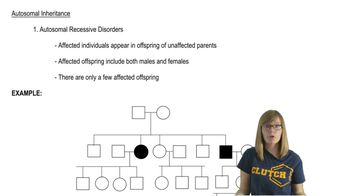
Draw a pedigree that illustrates the transmission of the dominant trait from the grandmother to two of her grandchildren who are first cousins.
386
views

 검증된 단계별 안내
 09:08
09:08
 18:27
18:27 07:41
07:41A woman expressing a dominant phenotype is heterozygous (Dd) for the gene.
Draw a pedigree that illustrates the transmission of the dominant trait from the grandmother to two of her grandchildren who are first cousins.
A woman expressing a dominant phenotype is heterozygous (Dd) for the gene.
What is the probability that the dominant allele carried by the woman will be inherited by a grandchild?
An organism having the genotype AaBbCcDdEe is self-fertilized. Assuming the five genes assort independently, determine the following proportions:
Progeny that are expected to have a genotype identical to that of the parent.
A woman expressing a dominant phenotype is heterozygous (Dd) for the gene.
What is the probability that two grandchildren of the woman who are first cousins to one another will each inherit the dominant allele?
An organism having the genotype AaBbCcDdEe is self-fertilized. Assuming the five genes assort independently, determine the following proportions:
Gametes that are expected to carry only dominant alleles.
An organism having the genotype AaBbCcDdEe is self-fertilized. Assuming the five genes assort independently, determine the following proportions:
Progeny that are expected to have a phenotype identical to that of the parent.