Skip to main content
GOB Chemistry
나의 코스
배우기
시험 준비
AI 튜터
학습 가이드
교과서적 해결책
플래시카드
탐험해 보세요
앱을 사용해 보세요
나의 코스
배우기
시험 준비
AI 튜터
학습 가이드
교과서적 해결책
플래시카드
탐험해 보세요
앱을 사용해 보세요
뒤로
ATP and Energy definitions
카드를 뒤집기 위해 탭할 수 있습니다.
Mitochondria
카드를 뒤집기 위해 탭할 수 있습니다.
👆
Mitochondria
Organelle responsible for most cellular energy production, featuring specialized membranes and compartments for efficient ATP synthesis.
진행 상황 추적
컨트롤 버튼이 '내비게이션' 모드로 변경되었습니다.
1/15
관련 플래시카드
관련 실천
추천 영상
ATP and Energy quiz
ATP and Energy
15 용어
ATP and Energy
21. The Generation of Biochemical Energy
7 문제점
주제
Ernest
Intro to Cofactors
21. The Generation of Biochemical Energy
1 문제
주제
KeyshawnDavis
21. The Generation of Biochemical Energy - Part 1 of 2
5 주제
13 문제점
장
KeyshawnDavis
21. The Generation of Biochemical Energy - Part 2 of 2
6 주제
13 문제점
장
Nicole
VideoThumbView.guidedCourse
0:30
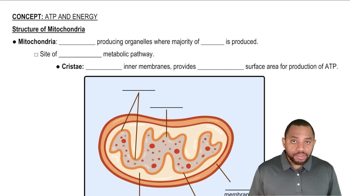
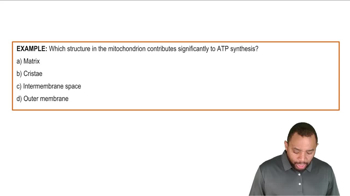
Structure of Mitochondria Example 1
2591
views
2
rank
VideoThumbView.guidedCourse
1:46
Structure of Mitochondria Concept 1
3367
views
3
rank
VideoThumbView.guidedCourse
1:03
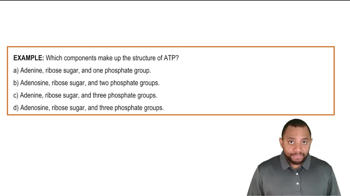
Adenosine Triphosphate (ATP) Example 2
3208
views
이 집합의 용어 (15)
하이드의 정의
Mitochondria
Organelle responsible for most cellular energy production, featuring specialized membranes and compartments for efficient ATP synthesis.
Cristae
Folded inner membranes within mitochondria that increase surface area, enhancing the organelle's capacity for ATP generation.
Matrix
Internal compartment of mitochondria where metabolic pathways occur, surrounded by the inner membrane and cristae.
Outer Membrane
External boundary of mitochondria, separating the organelle from the cytoplasm and providing structural support.
Inner Membrane
Mitochondrial layer containing cristae, crucial for housing proteins involved in ATP synthesis.
Intermembrane Space
Region between the inner and outer mitochondrial membranes, playing a role in cellular energy processes.
ATP
High-energy molecule composed of adenine, ribose, and three phosphates, serving as the main energy currency in cells.
Adenine
Nitrogenous base forming part of ATP, contributing to the molecule's structure and energy storage capability.
Ribose
Five-carbon sugar in ATP, linking adenine to phosphate groups and forming the backbone of the molecule.
Phosphate Group
Component of ATP, whose high-energy bonds release energy upon hydrolysis, enabling cellular work.
ADP
Molecule formed after ATP loses one phosphate, containing two phosphates and capable of being recharged to ATP.
AMP
Low-energy molecule with a single phosphate, resulting from further hydrolysis of ADP.
Inorganic Phosphate
Phosphate ion released during ATP hydrolysis, not bonded to carbon, and involved in energy transfer.
Phosphorus-Oxygen Bond
High-energy linkage in ATP, whose cleavage releases energy essential for cellular processes.
Glucose 6-Phosphate
Phosphorylated glucose molecule produced by coupling ATP hydrolysis with glucose phosphorylation, key in metabolism.
 뒤로뒤로
뒤로뒤로

 0:30
0:30