Skip to main content
GOB Chemistry
나의 코스
배우기
시험 준비
AI 튜터
학습 가이드
교과서적 해결책
플래시카드
탐험해 보세요
앱을 사용해 보세요
나의 코스
배우기
시험 준비
AI 튜터
학습 가이드
교과서적 해결책
플래시카드
탐험해 보세요
앱을 사용해 보세요
뒤로
Heating and Cooling Curves definitions
카드를 뒤집기 위해 탭할 수 있습니다.
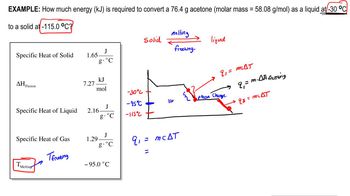
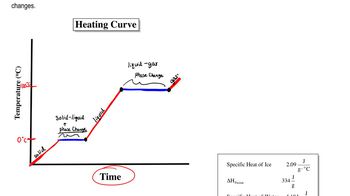
Heating Curve
카드를 뒤집기 위해 탭할 수 있습니다.
👆
Heating Curve
Graph showing temperature changes and phase transitions as a substance absorbs heat, highlighting constant temperature during phase changes.
진행 상황 추적
컨트롤 버튼이 '내비게이션' 모드로 변경되었습니다.
1/15
관련 플래시카드
관련 실천
추천 영상
Heating and Cooling Curves quiz
Heating and Cooling Curves
15 용어
Heating and Cooling Curves
8. Gases, Liquids and Solids
4 문제점
주제
Jules
Atomic, Ionic and Molecular Solids
8. Gases, Liquids and Solids
4 문제점
주제
Jules
8. Gases, Liquids and Solids - Part 1 of 2
8 주제
15 문제점
장
Jules
8. Gases, Liquids and Solids - Part 2 of 2
7 주제
15 문제점
장
Jules
VideoThumbView.guidedCourse
05:54
Heating and Cooling Curves Concept 2
2858
views
6
rank
VideoThumbView.guidedCourse
09:10
Heating and Cooling Curves
2779
views
7
rank
VideoThumbView.guidedCourse
09:03
Heating and Cooling Curves Concept 1
3787
views
11
rank
이 집합의 용어 (15)
하이드의 정의
Heating Curve
Graph showing temperature changes and phase transitions as a substance absorbs heat, highlighting constant temperature during phase changes.
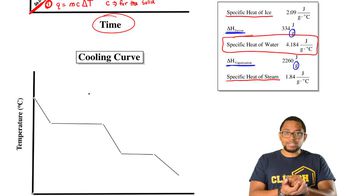
Cooling Curve
Graph depicting temperature decrease and phase transitions as a substance releases heat, with flat segments at phase changes.
Phase Change
Transition between solid, liquid, and gas where temperature remains constant and energy alters particle arrangement.
Melting Point
Specific temperature where a solid becomes a liquid, marked by a flat segment on a heating curve.
Boiling Point
Specific temperature where a liquid becomes a gas, indicated by a plateau on a heating curve.
Fusion
Process where a solid transforms into a liquid, requiring energy input and occurring at the melting point.
Vaporization
Process where a liquid turns into a gas, requiring significant energy to separate particles widely.
Condensation
Process where a gas becomes a liquid, releasing energy and forming intermolecular bonds.
Freezing
Process where a liquid becomes a solid, releasing energy as particles arrange into a fixed structure.
Potential Energy
Stored energy related to particle arrangement, increasing as substances move from solid to gas.
Kinetic Energy
Energy associated with particle motion, directly linked to temperature changes in a substance.
Specific Heat
Amount of energy required to raise the temperature of one gram of a substance by one degree Celsius.
Endothermic Process
Energy-absorbing transformation, such as melting or vaporization, resulting in positive heat values.
Exothermic Process
Energy-releasing transformation, such as freezing or condensation, resulting in negative heat values.
Delta H
Symbol representing enthalpy change during a phase transition, with sign indicating energy absorbed or released.
 뒤로뒤로
뒤로뒤로
 05:54
05:54