Skip to main content
GOB Chemistry
나의 코스
배우기
시험 준비
AI 튜터
학습 가이드
교과서적 해결책
플래시카드
탐험해 보세요
앱을 사용해 보세요
나의 코스
배우기
시험 준비
AI 튜터
학습 가이드
교과서적 해결책
플래시카드
탐험해 보세요
앱을 사용해 보세요
뒤로
Introduction to Organic Chemistry definitions
카드를 뒤집기 위해 탭할 수 있습니다.
Organic Compound
카드를 뒤집기 위해 탭할 수 있습니다.
👆
Organic Compound
A molecule primarily composed of carbon atoms, often bonded to hydrogen, and sometimes containing oxygen, nitrogen, sulfur, or halogens.
진행 상황 추적
컨트롤 버튼이 '내비게이션' 모드로 변경되었습니다.
1/14
관련 플래시카드
관련 실천
추천 영상
Introduction to Organic Chemistry quiz
Introduction to Organic Chemistry
15 용어
Introduction to Organic Chemistry
12. Introduction to Organic Chemistry
7 문제점
주제
Jules
Structural Formula
12. Introduction to Organic Chemistry
5 문제점
주제
Jules
12. Introduction to Organic Chemistry - Part 1 of 2
6 주제
13 문제점
장
Jules
12. Introduction to Organic Chemistry - Part 2 of 2
5 주제
12 문제점
장
Jules
VideoThumbView.guidedCourse
1:29
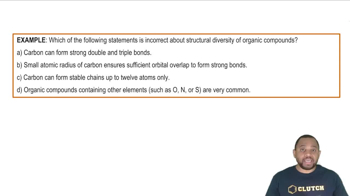
Structural Diversity Example 2
3612
views
26
rank
VideoThumbView.guidedCourse
0:42
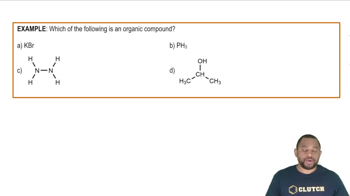
Introduction to Organic Chemistry Example 1
3906
views
55
rank
VideoThumbView.guidedCourse
1:30
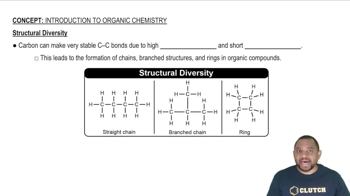
Structural Diversity Concept 2
3792
views
38
rank
이 집합의 용어 (14)
하이드의 정의
Organic Compound
A molecule primarily composed of carbon atoms, often bonded to hydrogen, and sometimes containing oxygen, nitrogen, sulfur, or halogens.
Hydrocarbon
A molecule consisting solely of carbon and hydrogen atoms, forming the simplest class of organic compounds.
Propane
A three-carbon hydrocarbon commonly used as fuel, featuring only single bonds between its atoms.
Ethanol
A two-carbon molecule with an -OH group, found in alcoholic beverages like wine.
Caffeine
A complex organic molecule containing carbon, nitrogen, and multiple double bonds, present in coffee.
Geraniol
A fragrant organic molecule with pi bonds and an -OH group, naturally occurring in roses.
Carbon-Carbon Bond
A linkage between two carbon atoms, notable for its stability, high bond energy, and short bond length.
Structural Diversity
The variety in molecular shapes, including chains, branches, and rings, enabled by carbon's bonding abilities.
Pi Bond
A type of covalent bond formed from sideways overlap of orbitals, often found in double bonds.
Halogen
An element such as fluorine, chlorine, bromine, or iodine, sometimes present in organic molecules.
Branched Structure
A molecular arrangement where a carbon atom is attached off the main chain, creating a side group.
Cyclic Structure
A ring-shaped arrangement of atoms, often formed by carbon atoms in organic molecules.
Bond Energy
The amount of energy required to break a chemical bond, contributing to the stability of organic molecules.
Bond Length
The distance between the nuclei of two bonded atoms, with shorter values indicating stronger bonds.
 뒤로뒤로
뒤로뒤로
 1:29
1:29