Skip to main content
GOB Chemistry
나의 코스
배우기
시험 준비
AI 튜터
학습 가이드
교과서적 해결책
플래시카드
탐험해 보세요
앱을 사용해 보세요
나의 코스
배우기
시험 준비
AI 튜터
학습 가이드
교과서적 해결책
플래시카드
탐험해 보세요
앱을 사용해 보세요
뒤로
Summary of Protein Structure quiz
카드를 뒤집기 위해 탭할 수 있습니다.
What are the four levels of protein structural organization?
카드를 뒤집기 위해 탭할 수 있습니다.
👆
What are the four levels of protein structural organization?
The four levels are primary, secondary, tertiary, and quaternary structures.
진행 상황 추적
컨트롤 버튼이 '내비게이션' 모드로 변경되었습니다.
1/15
관련 플래시카드
관련 실천
추천 영상
Summary of Protein Structure definitions
Summary of Protein Structure
15 용어
Summary of Protein Structure
18. Amino Acids and Proteins
7 문제점
주제
KeyshawnDavis
Protein Denaturation
18. Amino Acids and Proteins
주제
18. Amino Acids and Proteins - Part 1 of 2
6 주제
13 문제점
장
Jules
18. Amino Acids and Proteins - Part 2 of 2
5 주제
13 문제점
장
Jules
VideoThumbView.guidedCourse
1:47
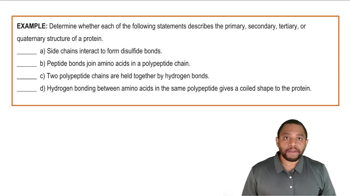
Summary of Protein Structure Example 1
1796
views
4
rank
VideoThumbView.guidedCourse
2:56
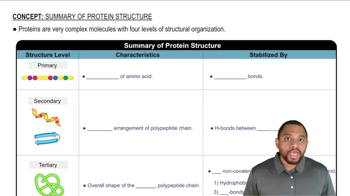
Summary of Protein Structure Concept 1
1951
views
7
rank
이 집합의 용어 (15)
하이드의 정의
What are the four levels of protein structural organization?
The four levels are primary, secondary, tertiary, and quaternary structures.
What characterizes the primary structure of a protein?
Primary structure is the sequence of amino acids linked by peptide bonds.
What type of bond stabilizes the primary structure of proteins?
Peptide bonds stabilize the primary structure.
What is the secondary structure of a protein?
Secondary structure is the spatial arrangement of the polypeptide chain into alpha helices or beta pleated sheets.
Which bonds stabilize the secondary structure of proteins?
Hydrogen bonds between backbone atoms stabilize the secondary structure.
What are the two main types of secondary protein structures?
The two main types are alpha helices and beta pleated sheets.
What characterizes the tertiary structure of a protein?
Tertiary structure is the overall shape of the folded polypeptide chain.
Which interactions stabilize the tertiary structure of proteins?
Tertiary structure is stabilized by hydrophobic and hydrophilic interactions, hydrogen bonding, salt bridges, and a disulfide bridge.
Where are hydrophobic portions of a protein typically found in tertiary structure?
Hydrophobic portions are found on the interior of the folded polypeptide chain.
What is a disulfide bridge in protein structure?
A disulfide bridge is a covalent bond that helps stabilize the tertiary structure.
What is the quaternary structure of a protein?
Quaternary structure is the association of two or more polypeptide subunits.
How is quaternary structure stabilized?
It is stabilized by the same interactions as the tertiary structure: hydrophobic, hydrophilic, hydrogen bonds, salt bridges, and disulfide bridges.
What distinguishes quaternary structure from tertiary structure?
Quaternary structure involves multiple polypeptide chains, while tertiary structure is the folding of a single chain.
What is the role of salt bridges in protein structure?
Salt bridges are non-covalent interactions that help stabilize tertiary and quaternary structures.
How do hydrophilic portions of a protein orient themselves in tertiary structure?
Hydrophilic portions orient themselves on the outside of the folded polypeptide chain, interacting with water.
 뒤로뒤로
뒤로뒤로

 1:47
1:47