뒤로

GOB Chemistry Key Concepts

컨트롤 버튼이 '내비게이션' 모드로 변경되었습니다.
1/22
  • What are the three main unit systems in chemistry?

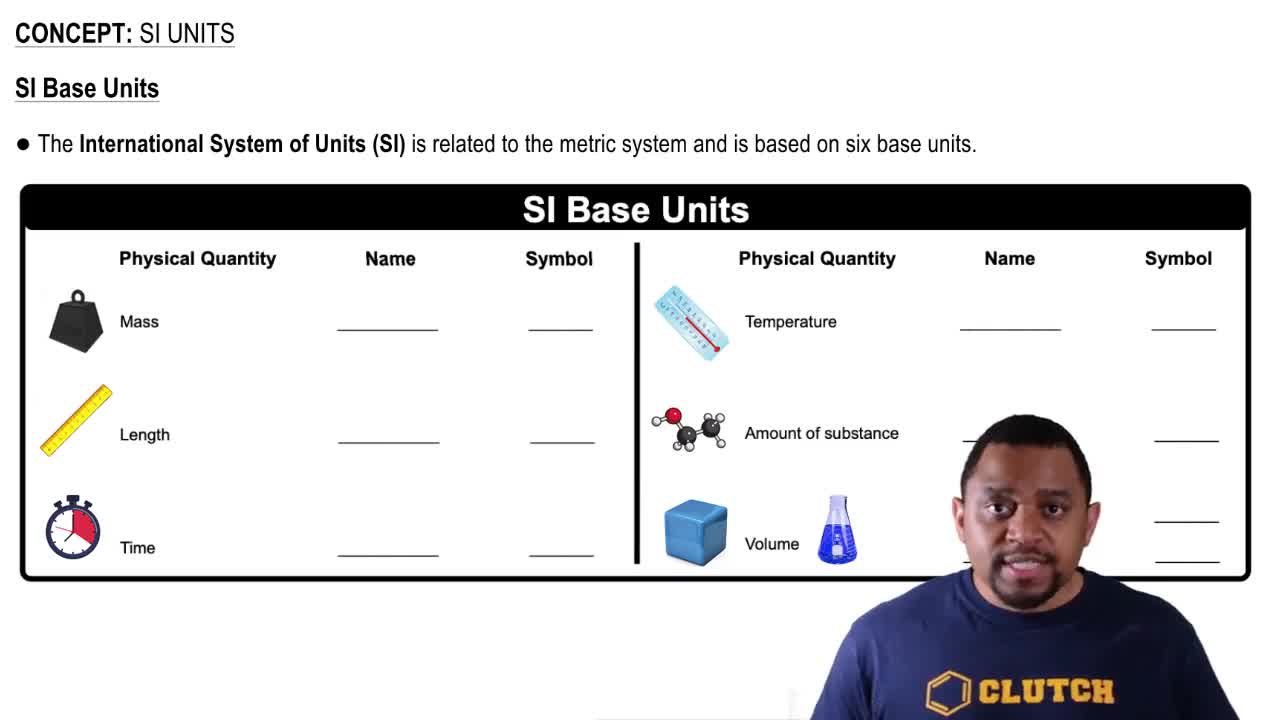
    The three main unit systems are S.I. (International System of Units), metric system, and USCS (United States Customary System).
  • How do you identify significant figures in a number?

    Significant figures include all non-zero digits, zeros between significant digits, and trailing zeros in a decimal number.
  • What is dimensional analysis used for?

    Dimensional analysis is used to convert units and solve problems by treating units as algebraic factors.

  • Define an isotope.

    An isotope is an atom of the same element with the same number of protons but different numbers of neutrons.
  • What particles make up an atom?

    L An atom consists of protons and neutrons in the nucleus, and electrons orbiting the nucleus.

  • How do you determine the number of protons, neutrons, and electrons in an atom or ion?

    Protons = atomic number; Neutrons = mass number - atomic number; Electrons = protons ± charge of the ion.
  • Name the four types of nuclear decay.

    The four types are alpha decay, beta decay, positron emission, and gamma decay.
  • What is the difference between a pure substance and a mixture?

    A pure substance has a fixed composition (element or compound), while a mixture contains two or more substances physically combined.
  • How do you classify mixtures?

    Mixtures are classified as homogeneous (uniform composition) or heterogeneous (non-uniform composition).
  • Compare solids, liquids, and gases in terms of particle movement and intermolecular forces.

    Solids have tightly packed particles with strong forces; liquids have moderate movement and forces; gases have fast-moving particles with weak forces.
  • What is the difference between groups and periods on the periodic table?

    Groups are vertical columns with elements having similar properties; periods are horizontal rows showing increasing atomic number.
  • Where are metals and nonmetals located on the periodic table?

    Metals are mostly on the left and center; nonmetals are on the right side of the periodic table.
  • What information can you find about an element on the periodic table?

    You can find the element's name, atomic number, number of protons, valence electrons, and average atomic mass.
  • How do you predict the charge of ions formed by main-group elements?

    Main-group elements tend to form ions with charges equal to the number of electrons lost or gained to reach a full valence shell.
  • What is the difference between ionic and covalent compounds?

    Ionic compounds form from transfer of electrons between metals and nonmetals; covalent compounds form from sharing electrons between nonmetals.
  • How is covalent bond polarity predicted?

    Polarity is predicted based on the difference in electronegativity between bonded atoms.
  • What is the mole and Avogadro's number?

    A mole is a unit representing 6.022 × 10²³ particles, known as Avogadro's number.
  • How do you calculate molar mass of a compound?

    Add the atomic masses of all atoms in the compound's formula to find its molar mass in grams per mole.
  • How do you convert between moles, number of particles, and grams?

    Use Avogadro's number to convert between moles and particles, and molar mass to convert between moles and grams.
  • How do you distinguish the name of an ion from its atom name?

    An ion's name often includes a charge indicator (e.g., 'ion' or Roman numerals), while the atom name does not.
  • How do you identify if a compound is ionic or covalent from its formula?

    Compounds with metal and nonmetal elements are usually ionic; those with only nonmetals are usually covalent.
  • What is the purpose of writing nuclear decay equations?

    Nuclear decay equations show the transformation of unstable nuclei by indicating emitted particles and resulting elements.