Skip to main content
GOB Chemistry
나의 코스
배우기
시험 준비
AI 튜터
학습 가이드
교과서적 해결책
플래시카드
탐험해 보세요
앱을 사용해 보세요
나의 코스
배우기
시험 준비
AI 튜터
학습 가이드
교과서적 해결책
플래시카드
탐험해 보세요
앱을 사용해 보세요
뒤로
GOB Chemistry: Organic and Biological Chemistry Review
카드를 뒤집기 위해 탭할 수 있습니다.
What are the four types of bonds in hydrocarbons?
카드를 뒤집기 위해 탭할 수 있습니다.
👆
What are the four types of bonds in hydrocarbons?
Four Covalent Bonds
are present in hydrocarbons.
진행 상황 추적
컨트롤 버튼이 '내비게이션' 모드로 변경되었습니다.
1/26
추천 영상
VideoThumbView.guidedCourse
1:29
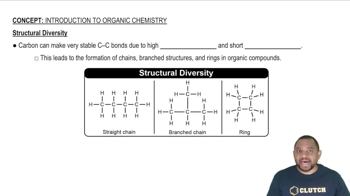
Structural Diversity Example 2
3580
views
24
rank
VideoThumbView.guidedCourse
0:42
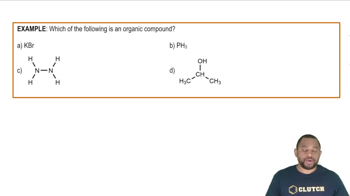
Introduction to Organic Chemistry Example 1
3848
views
52
rank
VideoThumbView.guidedCourse
1:30
Structural Diversity Concept 2
3755
views
36
rank
이 집합의 용어 (26)
하이드의 정의
What are the four types of bonds in hydrocarbons?
Four Covalent Bonds
are present in hydrocarbons.
What shapes do carbon atoms in hydrocarbons typically have?
Carbon atoms have a
Tetrahedral Shape
.
What system is used to name organic compounds?
The
IUPAC System
is used for naming organic compounds.
What are the three types of bonds in alkenes and alkynes?
Alkenes have a
Double Bond
, alkynes have a
Triple Bond
, and both can have
Cis-Trans Isomers
.
What functional groups contain carbon-sulfur single bonds?
Thiols
contain carbon-sulfur single bonds.
What are the three classes of carbon-oxygen single bond compounds?
Alcohols, Phenols, and Ethers
contain carbon-oxygen single bonds.
What compounds contain carbon-oxygen double bonds?
Aldehydes and Ketones
contain carbon-oxygen double bonds.
What process converts alcohols to aldehydes or ketones?
Oxidation
converts 1° alcohols to aldehydes and 2° alcohols to ketones.
What are monosaccharides and disaccharides?
Monosaccharides are simple sugars; disaccharides are formed by
glycosidic bonds
between monosaccharides.
What are the three common monosaccharides?
Glucose, Galactose, and Fructose
are common monosaccharides.
What are polysaccharides and their examples?
Polysaccharides are polymers like
Amylose, Amylopectin, Cellulose
in plants and
Glycogen
in animals.
What functional groups do amines contain?
Amines contain a
nitrogen atom
bonded to alkyl or aromatic groups.
What are the products of amide hydrolysis?
Amides hydrolyze to form
carboxylic acids and amines
.
What are the two parts of carboxylic acids?
Carboxylic acids have a
carboxyl group
and a
polar group
.
What are esters formed from?
Esters are formed by the
saponification
of carboxylate salts and alcohols.
What are the main types of lipids?
Lipids include
triacylglycerols, prostaglandins, waxes, and phospholipids
.
What distinguishes saturated and unsaturated fats?
Saturated fats have no double bonds and undergo
hydrolysis
; unsaturated fats have double bonds and undergo
saponification
.
What are the structural levels of proteins?
Proteins have
primary, secondary, tertiary, and quaternary structures
.
What is the role of enzymes in proteins?
Enzymes bind substrates at the
active site
to form an
ES complex
and can be inhibited by
inhibitors
.
What causes protein denaturation?
Denaturation is caused by
heat, acids, bases, and organic compounds
.
What are the two types of nucleic acids?
DNA and RNA
are the two types of nucleic acids.
What bases are found in DNA and RNA?
DNA contains
A, T, G, C
; RNA contains
A, U, G, C
.
What is the function of mRNA, tRNA, and rRNA?
mRNA carries codons, tRNA places amino acids, and rRNA produces proteins.
What is reverse transcription?
Reverse transcription is the process where
RNA is used to make DNA
.
What types of mutations can lead to genetic disease?
Point mutation, deletion mutation, and insertion mutation can cause genetic disease.
What is the central dogma of molecular biology?
Genetic information flows from
DNA to RNA (transcription) to protein (translation)
.
 뒤로뒤로
뒤로뒤로
 1:29
1:29