
교과서 질문
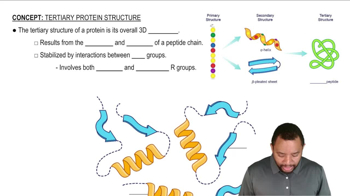
Determine whether each of the following statements describes the primary, secondary, tertiary, or quaternary structure of a protein.
d. Amino acids react in a condensation reaction to form a peptide bond.
730
views
 검증된 단계별 안내
 2:07
2:07
 5:16
5:16 04:38
04:38Determine whether each of the following statements describes the primary, secondary, tertiary, or quaternary structure of a protein.
d. Amino acids react in a condensation reaction to form a peptide bond.
Determine whether each of the following statements describes the primary, secondary, tertiary, or quaternary structure of a protein.
d. Hydrogen bonding between amino acids in the same polypeptide gives a coiled shape to the protein.
Determine whether each of the following statements describes the primary, secondary, tertiary, or quaternary structure of a protein.
b. Hydrogen bonds form between adjacent segments of the backbone of the same protein to form a “folded-fan” structure.
Identify each of the following statements as characteristic of protein denaturation or protein hydrolysis.
a. Milk curdles when lemon juice is added to it.
List the type of attractive force disrupted and the level of protein structure changed by the following denaturing treatments:
a. adding salt to soy milk to make tofu
Myoglobin is a protein containing 153 amino acids. Approximately half of the amino acids in myoglobin have polar side chains.
b. Where would you expect the nonpolar side chains to be?