Ch.21 The Generation of Biochemical Energy
McMurry - Fundamentals of General, Organic, and Biological Chemistry 8th Edition
McMurry8th EditionFundamentals of General, Organic, and Biological ChemistryISBN: 9780134015187당신이 사용하는 게 아니라요?교과서 변경
21장, 문제 14

Identify the participants in the citric acid cycle that contain alcohol groups. Identify these groups as primary, secondary, or tertiary alcohols.

검증된 단계별 안내
1
Understand the citric acid cycle: The citric acid cycle (also known as the Krebs cycle or TCA cycle) is a series of chemical reactions used by aerobic organisms to generate energy. It involves several intermediates, some of which contain alcohol functional groups (-OH).
Review the structure of each intermediate in the citric acid cycle: Key intermediates include citrate, isocitrate, α-ketoglutarate, succinyl-CoA, succinate, fumarate, malate, and oxaloacetate. Focus on identifying those with alcohol groups.
Identify intermediates with alcohol groups: Examine the molecular structures of the intermediates. Citrate and isocitrate are the two intermediates in the cycle that contain alcohol groups (-OH).
Classify the alcohol groups: Determine the type of alcohol group based on the carbon atom to which the -OH group is attached. A primary alcohol has the -OH group attached to a carbon bonded to one other carbon, a secondary alcohol is attached to a carbon bonded to two other carbons, and a tertiary alcohol is attached to a carbon bonded to three other carbons. For example, citrate contains tertiary alcohol groups, while isocitrate contains secondary alcohol groups.
Summarize the findings: Conclude that citrate and isocitrate are the participants in the citric acid cycle that contain alcohol groups, and classify these groups as tertiary (citrate) and secondary (isocitrate) alcohols.

비슷한 문제에 대한 검증된 영상 답변:

이 영상 해법은 위 문제에 도움이 된다고 튜터들이 추천한 것입니다.
영상 길이:
2m

주요 개념

질문에 올바르게 답하기 위해 반드시 이해해야 하는 핵심 개념들은 다음과 같습니다.

Citric Acid Cycle

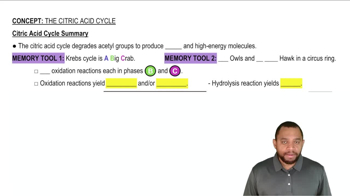
The citric acid cycle, also known as the Krebs cycle, is a series of chemical reactions used by all aerobic organisms to generate energy. It takes place in the mitochondria and involves the oxidation of acetyl-CoA to produce ATP, NADH, and FADH2. Understanding this cycle is crucial for identifying the specific metabolites that contain alcohol groups.
추천 영상:
가이드 코스
2:31
Citric Acid Cycle Summary Concept 12

Alcohol Functional Groups

Alcohols are organic compounds characterized by the presence of one or more hydroxyl (-OH) groups. They can be classified as primary, secondary, or tertiary based on the carbon atom to which the hydroxyl group is attached. This classification is important for understanding the reactivity and properties of the alcohols present in the citric acid cycle.
추천 영상:
가이드 코스
1:41
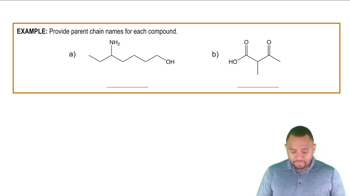
Functional Group Priorities Example 1

Classification of Alcohols

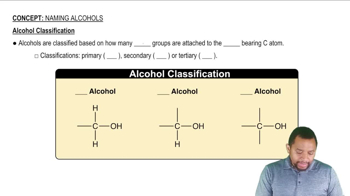
The classification of alcohols into primary, secondary, and tertiary is based on the number of carbon atoms bonded to the carbon with the hydroxyl group. Primary alcohols have one carbon, secondary have two, and tertiary have three. This distinction is essential for identifying the specific alcohol groups in the citric acid cycle participants and understanding their biochemical roles.
추천 영상:
가이드 코스
1:10
Alcohol Classification Concept 2