Ch.21 The Generation of Biochemical Energy
McMurry - Fundamentals of General, Organic, and Biological Chemistry 8th Edition
McMurry8th EditionFundamentals of General, Organic, and Biological ChemistryISBN: 9780134015187당신이 사용하는 게 아니라요?교과서 변경
21장, 문제 80

We talk of burning food in a combustion process, producing CO2 and H2O from food and O2. Explain how O2 is involved in the process although no O2 is directly involved in the citric acid cycle.

검증된 단계별 안내
1
Understand the context: The citric acid cycle (also known as the Krebs cycle) is a central metabolic pathway that generates energy by oxidizing acetyl-CoA derived from carbohydrates, fats, and proteins. While O₂ is not directly involved in the reactions of the citric acid cycle, it plays a crucial role in the overall process of cellular respiration.
Explain the role of O₂ in cellular respiration: O₂ is the final electron acceptor in the electron transport chain, which is the stage of cellular respiration that follows the citric acid cycle. The electron transport chain is located in the inner mitochondrial membrane and is responsible for producing the majority of ATP (energy) in cells.
Connect the citric acid cycle to the electron transport chain: The citric acid cycle produces reduced coenzymes, specifically NADH and FADH₂, which carry high-energy electrons to the electron transport chain. These electrons are passed through a series of protein complexes, ultimately reducing O₂ to form H₂O.
Highlight the importance of O₂: Without O₂ to act as the final electron acceptor, the electron transport chain would cease to function. This would lead to a buildup of NADH and FADH₂, preventing the citric acid cycle from continuing because it relies on the availability of oxidized forms of these coenzymes (NAD⁺ and FAD).
Summarize the connection: Although O₂ is not directly involved in the chemical reactions of the citric acid cycle, it is essential for maintaining the flow of electrons in the electron transport chain. This ensures the regeneration of NAD⁺ and FAD, which are necessary for the citric acid cycle to proceed and for the cell to produce energy efficiently.

비슷한 문제에 대한 검증된 영상 답변:

이 영상 해법은 위 문제에 도움이 된다고 튜터들이 추천한 것입니다.
영상 길이:
4m

주요 개념

질문에 올바르게 답하기 위해 반드시 이해해야 하는 핵심 개념들은 다음과 같습니다.

Combustion Process

The combustion process refers to the chemical reaction where a substance, typically organic matter like food, reacts with oxygen (O₂) to produce energy, carbon dioxide (CO₂), and water (H₂O). In biological systems, this process is analogous to cellular respiration, where glucose is oxidized to release energy, highlighting the role of O₂ as a crucial reactant in energy production.
추천 영상:
가이드 코스
2:25
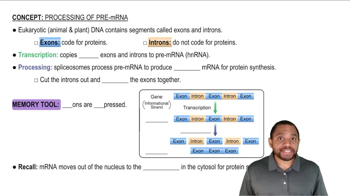
Processing of Pre-mRNA Concept 1

Cellular Respiration

Cellular respiration is a metabolic pathway that converts biochemical energy from nutrients into adenosine triphosphate (ATP), with byproducts of CO₂ and H₂O. It consists of several stages, including glycolysis, the citric acid cycle, and oxidative phosphorylation, where O₂ is essential for the final stage, allowing for the efficient production of ATP through the electron transport chain.
추천 영상:
가이드 코스
1:47
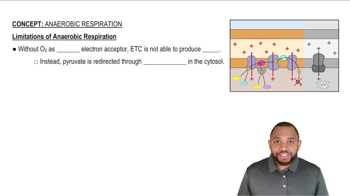
Anaerobic Respiration Concept 1

Citric Acid Cycle

The citric acid cycle, also known as the Krebs cycle, is a series of enzymatic reactions that occur in the mitochondria, where acetyl-CoA is oxidized to produce electron carriers (NADH and FADH₂) and CO₂. Although O₂ is not directly involved in this cycle, it is critical for the subsequent oxidative phosphorylation stage, where the electron carriers donate electrons to the electron transport chain, ultimately requiring O₂ to regenerate ATP.
추천 영상:
가이드 코스
2:31
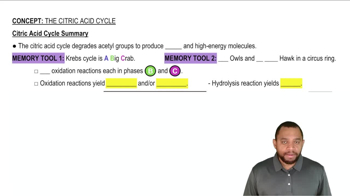
Citric Acid Cycle Summary Concept 12