Ch.24 Lipid Metabolism
McMurry - Fundamentals of General, Organic, and Biological Chemistry 8th Edition
McMurry8th EditionFundamentals of General, Organic, and Biological ChemistryISBN: 9780134015187당신이 사용하는 게 아니라요?교과서 변경
24장, 문제 64

Consuming too many carbohydrates causes deposition of fats in adipose tissue. How does this happen?

검증된 단계별 안내
1
Carbohydrates consumed in excess are broken down into glucose during digestion. This glucose enters the bloodstream, increasing blood sugar levels.
The pancreas responds to elevated blood sugar levels by releasing insulin, a hormone that facilitates the uptake of glucose into cells for energy or storage.
When the energy needs of the body are met, excess glucose is converted into glycogen and stored in the liver and muscles. However, the storage capacity for glycogen is limited.
Once glycogen storage is full, any additional glucose is converted into fatty acids through a process called lipogenesis. These fatty acids are then assembled into triglycerides.
Triglycerides are transported to adipose tissue, where they are stored as fat, leading to the deposition of fats in the body when carbohydrate intake exceeds energy expenditure.

비슷한 문제에 대한 검증된 영상 답변:

이 영상 해법은 위 문제에 도움이 된다고 튜터들이 추천한 것입니다.
영상 길이:
1m

주요 개념

질문에 올바르게 답하기 위해 반드시 이해해야 하는 핵심 개념들은 다음과 같습니다.

Carbohydrate Metabolism

Carbohydrate metabolism refers to the biochemical processes that convert carbohydrates into energy. When carbohydrates are consumed, they are broken down into glucose, which is used for immediate energy or stored as glycogen in the liver and muscles. If carbohydrate intake exceeds the body's energy needs, the excess glucose is converted into fatty acids through a process called lipogenesis.
추천 영상:
가이드 코스
1:53
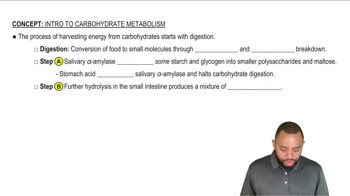
Intro To Carbohydrate Metabolism Concept 1

Lipogenesis

Lipogenesis is the metabolic process through which excess carbohydrates are converted into fat for storage. This occurs primarily in the liver and adipose tissue when there is an abundance of glucose. The fatty acids produced are then combined with glycerol to form triglycerides, which are stored in adipose tissue, leading to increased fat deposition.

Adipose Tissue Function

Adipose tissue is a type of connective tissue that stores energy in the form of fat and plays a crucial role in regulating metabolism. It serves as an energy reserve, insulates the body, and protects vital organs. When excess carbohydrates are converted to fat, adipose tissue expands, leading to increased fat storage and potential weight gain.
추천 영상:
가이드 코스
02:16
Logarithmic Functions