Ch.14 Carboxylic Acids, Esters, Amines, and Amides
Timberlake - Chemistry: An Introduction to General, Organic, and Biological Chemistry 13th Edition
Timberlake13th EditionChemistry: An Introduction to General, Organic, and Biological ChemistryISBN: 9780134421353당신이 사용하는 게 아니라요?교과서 변경
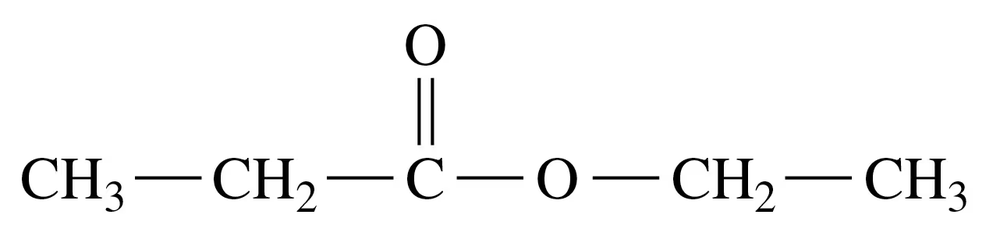
14장, 문제 57c

Write the IUPAC and common names, if any, for each of the following:
c. Structural formula of an ester, showing carbon chains and functional groups with labels for each atom.

검증된 단계별 안내
1
Identify the functional group(s) present in the given compound. Functional groups determine the suffix and sometimes the prefix of the IUPAC name. For example, alcohols (-OH) use the suffix '-ol', while carboxylic acids (-COOH) use '-oic acid'.
Determine the longest continuous carbon chain that includes the functional group. This chain will serve as the parent chain, and its length determines the base name (e.g., 'meth-' for 1 carbon, 'eth-' for 2 carbons, etc.).
Number the carbon atoms in the parent chain, starting from the end closest to the functional group. This ensures the functional group gets the lowest possible number.
Identify and name any substituents (e.g., alkyl groups, halogens) attached to the parent chain. Use prefixes like 'methyl-', 'ethyl-', or 'chloro-' and indicate their positions on the chain using the numbering from the previous step.
Combine the elements of the name: Start with the substituents in alphabetical order (with their positions), followed by the parent chain name, and finally the suffix for the functional group. If the compound has a common name, it can be provided alongside the IUPAC name.

비슷한 문제에 대한 검증된 영상 답변:

이 영상 해법은 위 문제에 도움이 된다고 튜터들이 추천한 것입니다.
영상 길이:
2m

주요 개념

질문에 올바르게 답하기 위해 반드시 이해해야 하는 핵심 개념들은 다음과 같습니다.

IUPAC Nomenclature

IUPAC nomenclature is a systematic method for naming chemical compounds established by the International Union of Pure and Applied Chemistry. It provides a unique name for each compound based on its structure, ensuring clarity and consistency in communication among chemists. Understanding the rules of IUPAC nomenclature is essential for accurately identifying and naming organic and inorganic compounds.
추천 영상:
가이드 코스
3:18
IUPAC Naming Concept 3

Common Names

Common names are the traditional or widely accepted names for chemical compounds that may not follow systematic naming conventions. These names often arise from historical usage or specific characteristics of the compounds. Familiarity with common names is important, as they are frequently used in both academic and industrial contexts, making communication more accessible.

Structural Representation

Structural representation refers to the depiction of a chemical compound's molecular structure, which can be illustrated through various formats such as Lewis structures, skeletal formulas, or 3D models. Understanding how to interpret these representations is crucial for determining the compound's connectivity and functional groups, which are key factors in both IUPAC and common naming.
추천 영상:
가이드 코스
2:08
Molecular Representations Concept 1