Ch.13 Carbohydrates
Timberlake - Chemistry: An Introduction to General, Organic, and Biological Chemistry 14th Edition
Timberlake14th EditionChemistry: An Introduction to General, Organic, and Biological ChemistryISBN: 9781292472249당신이 사용하는 게 아니라요?교과서 변경
13장, 문제 47a

Describe the similarities and differences in the following:
a. amylose and amylopectin

검증된 단계별 안내
1
Amylose and amylopectin are both polysaccharides composed of glucose monomers, making them similar in their basic building blocks and their role as energy storage molecules in plants.
Amylose is a linear polymer of glucose units connected by α(1→4) glycosidic bonds, meaning the glucose molecules are linked in a straight chain.
Amylopectin, on the other hand, is a branched polymer. It contains α(1→4) glycosidic bonds in the linear sections and α(1→6) glycosidic bonds at the branch points, which occur approximately every 24–30 glucose units.
Amylose tends to form a helical structure due to its linear nature, while amylopectin's branching prevents it from forming such a structure, making it more compact and soluble in water.
Both amylose and amylopectin are components of starch, but their proportions vary depending on the source. For example, in most plants, amylopectin is the predominant component, making up about 70–80% of starch, while amylose constitutes the remaining 20–30%.

비슷한 문제에 대한 검증된 영상 답변:

이 영상 해법은 위 문제에 도움이 된다고 튜터들이 추천한 것입니다.
영상 길이:
1m

주요 개념

질문에 올바르게 답하기 위해 반드시 이해해야 하는 핵심 개념들은 다음과 같습니다.

Amylose

Amylose is a linear polysaccharide made up of glucose units connected by α(1→4) glycosidic bonds. It typically forms a helical structure and is less soluble in water compared to amylopectin. Amylose constitutes about 20-30% of starch and is primarily responsible for the gel-like properties of starch when cooked.
추천 영상:
가이드 코스
0:50
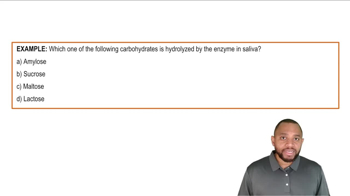
Intro To Carbohydrate Metabolism Example 1

Amylopectin

Amylopectin is a branched polysaccharide, also composed of glucose units, but with both α(1→4) and α(1→6) glycosidic bonds. This branching occurs approximately every 24 to 30 glucose units, resulting in a more complex structure that is more soluble in water and contributes to the thickening properties of starch. Amylopectin makes up about 70-80% of starch.
추천 영상:
가이드 코스
1:24
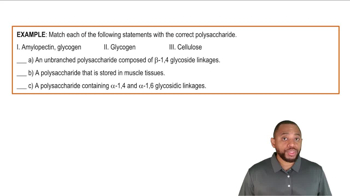
Polysaccharides Example 1

Starch Structure and Function

Starch is a carbohydrate storage molecule in plants, composed of amylose and amylopectin. The ratio of these two components affects the physical properties of starch, such as its solubility, digestibility, and ability to form gels. Understanding the structural differences between amylose and amylopectin is crucial for applications in food science, nutrition, and industrial processes.
추천 영상:
가이드 코스
02:16
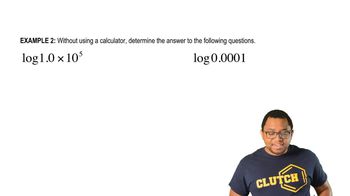
Logarithmic Functions