Ch.13 Carbohydrates
Timberlake - Chemistry: An Introduction to General, Organic, and Biological Chemistry 14th Edition
Timberlake14th EditionChemistry: An Introduction to General, Organic, and Biological ChemistryISBN: 9781292472249당신이 사용하는 게 아니라요?교과서 변경
13장, 문제 50d

Give the name of one or more polysaccharides that matches each of the following descriptions:
d. produces maltose during digestion

검증된 단계별 안내
1
Understand the problem: The question asks for a polysaccharide that, when digested, produces maltose. Maltose is a disaccharide composed of two glucose units linked by an α(1→4) glycosidic bond.
Recall the structure of polysaccharides: Polysaccharides are long chains of monosaccharides (like glucose) linked by glycosidic bonds. Some polysaccharides can be broken down into smaller units, such as disaccharides, during digestion.
Identify the polysaccharide that produces maltose: Starch is a polysaccharide made of glucose units linked by α(1→4) glycosidic bonds. During digestion, enzymes like amylase break down starch into maltose.
Consider the components of starch: Starch consists of two components—amylose (a linear polymer of glucose) and amylopectin (a branched polymer of glucose). Both components can produce maltose during digestion.
Conclude the answer: The polysaccharide that produces maltose during digestion is starch, which includes amylose and amylopectin as its components.

비슷한 문제에 대한 검증된 영상 답변:

이 영상 해법은 위 문제에 도움이 된다고 튜터들이 추천한 것입니다.
영상 길이:
2m

주요 개념

질문에 올바르게 답하기 위해 반드시 이해해야 하는 핵심 개념들은 다음과 같습니다.

Polysaccharides

Polysaccharides are long chains of monosaccharide units linked by glycosidic bonds. They serve various functions in living organisms, including energy storage and structural support. Common examples include starch, glycogen, and cellulose. Understanding their structure and function is essential for identifying specific polysaccharides based on their digestion products.
추천 영상:
가이드 코스
1:24
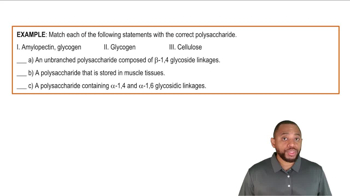
Polysaccharides Example 1

Maltose

Maltose is a disaccharide composed of two glucose molecules linked by an α(1→4) glycosidic bond. It is produced during the digestion of starch and glycogen by the enzyme amylase. Recognizing maltose's formation is crucial for linking polysaccharides to their digestive processes, particularly in carbohydrate metabolism.
추천 영상:
가이드 코스
0:50
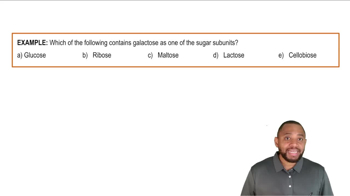
Types of Disaccharides Example 1

Amylase

Amylase is an enzyme that catalyzes the hydrolysis of starch into sugars, primarily maltose. It is found in saliva and the pancreas, playing a vital role in carbohydrate digestion. Understanding the function of amylase helps in identifying which polysaccharides yield maltose during digestion, as it breaks down complex carbohydrates into simpler sugars.
추천 영상:
가이드 코스
0:50
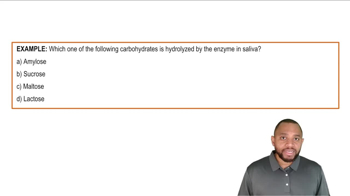
Intro To Carbohydrate Metabolism Example 1