Ch.13 Carbohydrates
Timberlake - Chemistry: An Introduction to General, Organic, and Biological Chemistry 14th Edition
Timberlake14th EditionChemistry: An Introduction to General, Organic, and Biological ChemistryISBN: 9781292472249당신이 사용하는 게 아니라요?교과서 변경
13장, 문제 2

What is the relationship between photosynthesis and respiration?

검증된 단계별 안내
1
Understand that photosynthesis and respiration are complementary biochemical processes that occur in living organisms. Photosynthesis occurs in plants, algae, and some bacteria, while respiration occurs in almost all living organisms.
Recognize that photosynthesis converts light energy into chemical energy stored in glucose molecules. The overall equation for photosynthesis is: 6CO2 + 6H2O + lightC6H12O6 + 6O2.
Note that cellular respiration is the process by which organisms break down glucose molecules to release energy in the form of ATP. The overall equation for respiration is the reverse of photosynthesis: C6H12O6 + 6O26CO2 + 6H2O + energy.
Identify the relationship: Photosynthesis produces glucose and oxygen, which are the reactants for respiration. Conversely, respiration produces carbon dioxide and water, which are the reactants for photosynthesis. This creates a cycle that supports life on Earth.
Conclude that photosynthesis and respiration are interconnected processes that maintain the balance of oxygen and carbon dioxide in the atmosphere, and they are essential for the flow of energy through ecosystems.

비슷한 문제에 대한 검증된 영상 답변:

이 영상 해법은 위 문제에 도움이 된다고 튜터들이 추천한 것입니다.
영상 길이:
3m
도움이 되었나요?

주요 개념

질문에 올바르게 답하기 위해 반드시 이해해야 하는 핵심 개념들은 다음과 같습니다.

Photosynthesis

Photosynthesis is the process by which green plants, algae, and some bacteria convert light energy into chemical energy, specifically glucose, using carbon dioxide and water. This process occurs primarily in the chloroplasts of plant cells and involves the pigment chlorophyll. The overall equation for photosynthesis can be summarized as: 6CO2 + 6H2O + light energy → C6H12O6 + 6O2.

Cellular Respiration

Cellular respiration is the metabolic process by which organisms convert glucose and oxygen into energy, carbon dioxide, and water. This process occurs in the mitochondria of cells and can be aerobic (requiring oxygen) or anaerobic (not requiring oxygen). The general equation for aerobic respiration is: C6H12O6 + 6O2 → 6CO2 + 6H2O + energy (ATP).
추천 영상:
가이드 코스
1:47
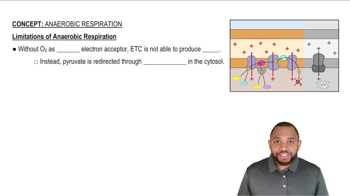
Anaerobic Respiration Concept 1

The Carbon Cycle

The carbon cycle is the natural process through which carbon is exchanged among the atmosphere, land, water, and living organisms. Photosynthesis and respiration are key components of this cycle, as plants absorb carbon dioxide during photosynthesis and release oxygen, while animals and other organisms take in oxygen and release carbon dioxide during respiration. This cyclical relationship helps maintain the balance of carbon in the ecosystem.
추천 영상:
가이드 코스
2:43
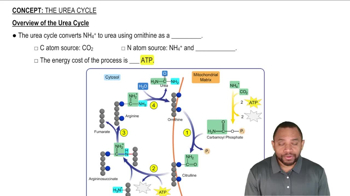
The Urea Cycle Concept 1