Ch.14 Carboxylic Acids, Esters, Amines, and Amides
Timberlake - Chemistry: An Introduction to General, Organic, and Biological Chemistry 14th Edition
Timberlake14th EditionChemistry: An Introduction to General, Organic, and Biological ChemistryISBN: 9781292472249당신이 사용하는 게 아니라요?교과서 변경
14장, 문제 63c

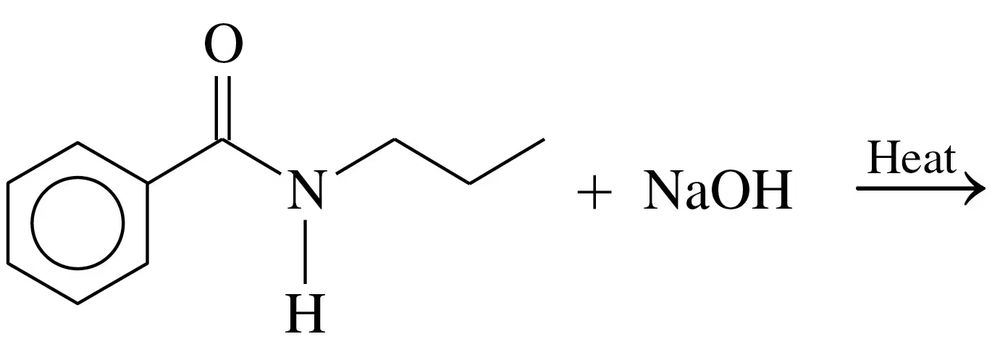
Draw the condensed structural or line-angle formulas for the products of the following:
c. Condensed structural formula showing a reaction between an amide and sodium hydroxide with heat.

검증된 단계별 안내
1
Analyze the given reaction and identify the type of reaction (e.g., addition, substitution, elimination, etc.). This will help determine the products formed.
Examine the reactants in the image provided. Identify the functional groups and any key features of the molecule that will influence the reaction.
Determine the reagents or conditions provided (if any) in the problem. These will guide the transformation of the reactants into the products.
Predict the products based on the reaction type and the changes expected in the functional groups or bonds. For example, if it is an addition reaction, identify where new bonds will form.
Draw the condensed structural formulas or line-angle formulas for the products. Ensure that the structures are complete, showing all atoms and bonds clearly, and verify that they follow the rules of valency and bonding.

비슷한 문제에 대한 검증된 영상 답변:

이 영상 해법은 위 문제에 도움이 된다고 튜터들이 추천한 것입니다.
영상 길이:
1m

주요 개념

질문에 올바르게 답하기 위해 반드시 이해해야 하는 핵심 개념들은 다음과 같습니다.

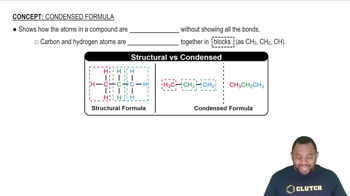
Condensed Structural Formula

A condensed structural formula is a way of representing a chemical compound that shows the arrangement of atoms and the connectivity between them without depicting all the bonds explicitly. It typically groups atoms together to indicate how they are bonded, making it easier to visualize the structure of the molecule. For example, in ethanol, the condensed formula is CH3CH2OH, indicating the presence of a hydroxyl group attached to a two-carbon chain.
추천 영상:
가이드 코스
1:53
Condensed Formula Concept 1

Line-Angle Formula

The line-angle formula, also known as the skeletal formula, is a simplified representation of organic molecules where vertices represent carbon atoms and lines represent bonds. This method omits hydrogen atoms attached to carbons, making it easier to visualize complex structures. For instance, a straight chain of five carbon atoms would be represented as a zigzag line, with each vertex corresponding to a carbon atom.
추천 영상:
가이드 코스
01:24
Bond Angles (Simplified) Concept 1

Chemical Products

Chemical products refer to the substances that result from a chemical reaction. In organic chemistry, understanding the products formed from reactants is crucial for predicting reaction outcomes. The products can vary based on the reaction conditions and mechanisms, and drawing their structures accurately is essential for analyzing their properties and potential applications.
추천 영상:
가이드 코스
00:58
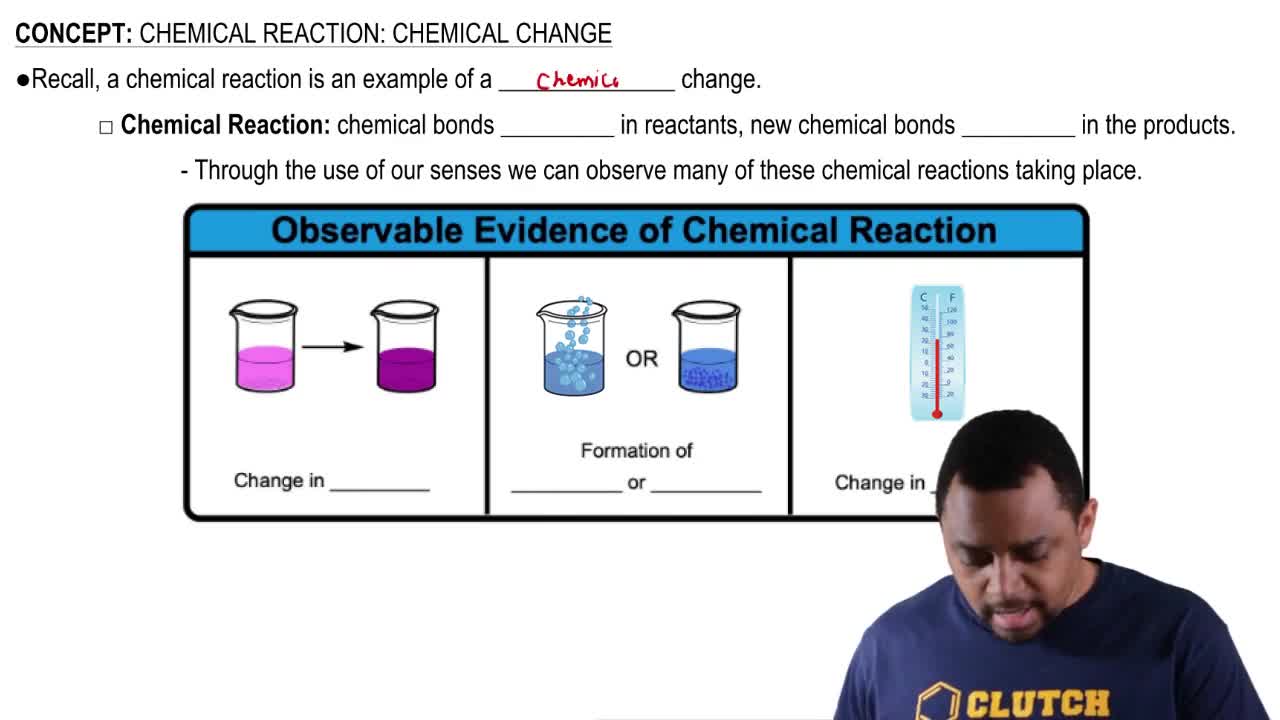
Chemical Reaction: Chemical Change Concept 1