Ch.14 Carboxylic Acids, Esters, Amines, and Amides
Timberlake - Chemistry: An Introduction to General, Organic, and Biological Chemistry 14th Edition
Timberlake14th EditionChemistry: An Introduction to General, Organic, and Biological ChemistryISBN: 9781292472249당신이 사용하는 게 아니라요?교과서 변경
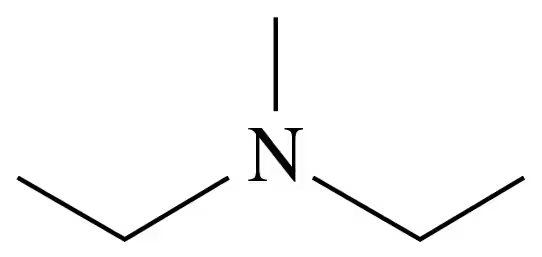
14장, 문제 29c

Write the common name for each of the following:
c. Chemical structure of a nitrogen atom bonded to two carbon chains, representing an amine compound.

검증된 단계별 안내
1
Identify the structure of the compound in the image. Look for functional groups, the number of carbon atoms, and any branching or substituents present.
Determine the parent chain, which is the longest continuous chain of carbon atoms in the structure. This will help in identifying the base name of the compound.
Examine the substituents attached to the parent chain. Note their positions and types (e.g., methyl, ethyl, etc.).
Combine the substituents and the parent chain name to form the common name. Common names often use prefixes like 'iso-', 'sec-', or 'tert-' to describe branching.
Verify the common name by comparing it to standard naming conventions for similar compounds, ensuring accuracy and consistency.

비슷한 문제에 대한 검증된 영상 답변:

이 영상 해법은 위 문제에 도움이 된다고 튜터들이 추천한 것입니다.
영상 길이:
3m

주요 개념

질문에 올바르게 답하기 위해 반드시 이해해야 하는 핵심 개념들은 다음과 같습니다.

Common Names in Biology

Common names are the everyday names used to refer to species, as opposed to their scientific names. They are often more accessible and easier to remember for the general public. However, common names can vary by region and language, leading to confusion. Understanding the context in which a common name is used is essential for accurate communication in biological discussions.

Taxonomy

Taxonomy is the science of classification of living organisms, which includes naming, describing, and categorizing species. It provides a systematic framework for identifying organisms and understanding their relationships. The scientific name of an organism, known as its binomial nomenclature, is derived from its genus and species, which helps avoid ambiguity associated with common names.

Image Identification

Image identification involves recognizing and naming organisms based on visual characteristics presented in an image. This process requires knowledge of distinguishing features such as color, shape, size, and habitat. Effective image identification is crucial in fields like biology and ecology, where visual cues can aid in the accurate classification and understanding of biodiversity.
추천 영상: