Ch.16 Amino Acids, Proteins, and Enzymes
Timberlake - Chemistry: An Introduction to General, Organic, and Biological Chemistry 14th Edition
Timberlake14th EditionChemistry: An Introduction to General, Organic, and Biological ChemistryISBN: 9781292472249당신이 사용하는 게 아니라요?교과서 변경
16장, 문제 1b

Classify each of the following proteins according to its function:
a. hemoglobin, oxygen carrier in the blood

검증된 단계별 안내
1
Step 1: Understand the role of hemoglobin in the body. Hemoglobin is a protein found in red blood cells that binds to oxygen in the lungs and transports it to tissues throughout the body.
Step 2: Recall the classification of proteins based on their function. Proteins can be categorized into several functional groups, such as structural, enzymatic, transport, hormonal, defensive, and storage proteins.
Step 3: Identify the specific function of hemoglobin. Since hemoglobin is responsible for carrying oxygen, it falls under the category of transport proteins.
Step 4: Confirm the classification by comparing hemoglobin's function to other transport proteins. Transport proteins are involved in moving substances like gases, ions, or molecules across biological systems, which aligns with hemoglobin's role.
Step 5: Conclude that hemoglobin is classified as a transport protein due to its function as an oxygen carrier in the blood.

비슷한 문제에 대한 검증된 영상 답변:

이 영상 해법은 위 문제에 도움이 된다고 튜터들이 추천한 것입니다.
영상 길이:
1m
도움이 되었나요?

주요 개념

질문에 올바르게 답하기 위해 반드시 이해해야 하는 핵심 개념들은 다음과 같습니다.

Protein Function Classification

Proteins can be classified based on their functions, which include structural support, transport, enzymes, and signaling. Understanding the specific role a protein plays in biological processes is essential for categorizing it correctly. For instance, transport proteins facilitate the movement of substances across cell membranes or within the bloodstream.
추천 영상:
가이드 코스
02:16
Logarithmic Functions

Hemoglobin

Hemoglobin is a globular protein found in red blood cells, primarily responsible for transporting oxygen from the lungs to tissues and returning carbon dioxide from tissues to the lungs. Its structure allows it to bind oxygen efficiently, making it crucial for cellular respiration and overall metabolic function. Hemoglobin's ability to change shape in response to oxygen levels is key to its function.
추천 영상:
가이드 코스
3:26
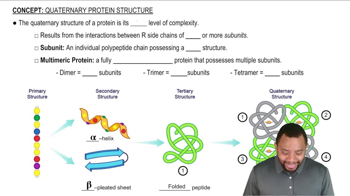
Quaternary Protein Structure Concept 1

Oxygen Transport

Oxygen transport refers to the mechanism by which oxygen is carried from the respiratory system to the body's tissues. In vertebrates, this is primarily achieved through hemoglobin in the blood. The efficiency of oxygen transport is vital for maintaining cellular metabolism and energy production, highlighting the importance of proteins like hemoglobin in physiological processes.
추천 영상:
가이드 코스
3:01
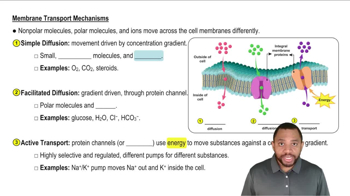
Membrane Transport Concept 2