Ch.16 Amino Acids, Proteins, and Enzymes
Timberlake - Chemistry: An Introduction to General, Organic, and Biological Chemistry 14th Edition
Timberlake14th EditionChemistry: An Introduction to General, Organic, and Biological ChemistryISBN: 9781292472249당신이 사용하는 게 아니라요?교과서 변경
16장, 문제 69

How do enzymes differ from catalysts used in chemical laboratories?

검증된 단계별 안내
1
Understand the definition of enzymes: Enzymes are biological molecules, typically proteins, that act as catalysts in biochemical reactions. They are highly specific to the reactions they catalyze and operate under mild conditions such as body temperature and neutral pH.
Understand the definition of laboratory catalysts: Catalysts used in chemical laboratories are often inorganic substances or metals that speed up chemical reactions. They are not specific to a single reaction and can work under a wide range of conditions, including high temperatures and pressures.
Compare specificity: Enzymes are highly specific, meaning they only catalyze specific reactions with specific substrates. Laboratory catalysts, on the other hand, are more general and can catalyze a variety of reactions.
Compare operating conditions: Enzymes function under mild conditions, such as physiological temperature and pH, whereas laboratory catalysts often require extreme conditions like high temperatures, pressures, or strong acids/bases.
Compare structure and mechanism: Enzymes have complex three-dimensional structures that include an active site where the substrate binds. This structure allows for precise control of the reaction. Laboratory catalysts typically lack such complex structures and rely on simpler mechanisms to lower activation energy.

비슷한 문제에 대한 검증된 영상 답변:

이 영상 해법은 위 문제에 도움이 된다고 튜터들이 추천한 것입니다.
영상 길이:
1m
도움이 되었나요?

주요 개념

질문에 올바르게 답하기 위해 반드시 이해해야 하는 핵심 개념들은 다음과 같습니다.

Enzymes

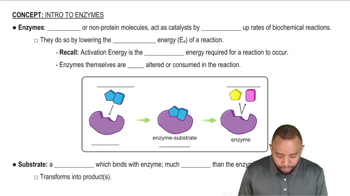
Enzymes are biological catalysts that accelerate chemical reactions in living organisms. They are typically proteins that lower the activation energy required for reactions, allowing them to occur more efficiently and at lower temperatures. Enzymes are highly specific, meaning each enzyme typically catalyzes only one type of reaction or acts on a specific substrate.
추천 영상:
가이드 코스
2:14
Intro to Enzymes Concept 1

Chemical Catalysts

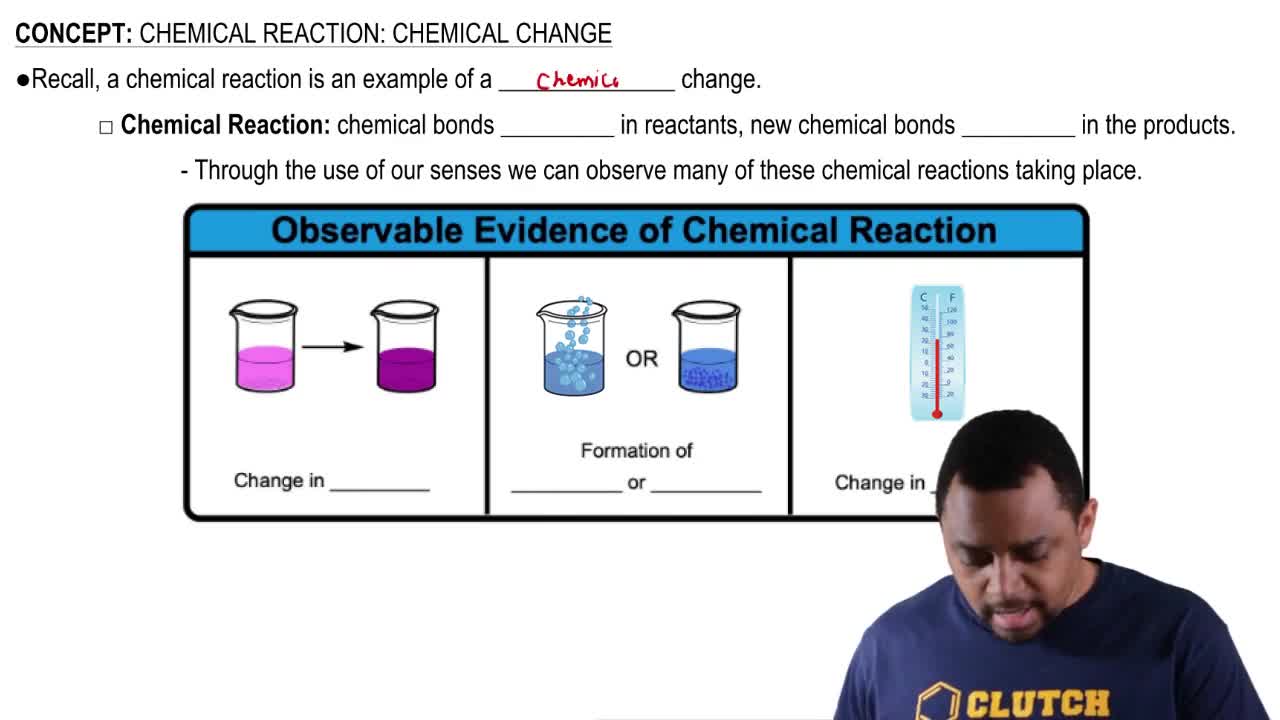
Chemical catalysts are substances that increase the rate of a chemical reaction without being consumed in the process. Unlike enzymes, which are often complex proteins, chemical catalysts can be metals, metal oxides, or other inorganic compounds. They can operate under a wider range of conditions, including extreme temperatures and pressures, and are not limited to biological systems.
추천 영상:
가이드 코스
00:58
Chemical Reaction: Chemical Change Concept 1

Specificity and Mechanism

The specificity of enzymes is a key difference from chemical catalysts, as enzymes are designed to interact with specific substrates through a unique active site. This specificity is often accompanied by a complex mechanism involving intermediate states, which is less common in chemical catalysts. Understanding these mechanisms is crucial for applications in biochemistry and industrial processes, where precise control over reactions is desired.
추천 영상:
가이드 코스
01:37
Specific Gravity