Ch.16 Amino Acids, Proteins, and Enzymes
Timberlake - Chemistry: An Introduction to General, Organic, and Biological Chemistry 14th Edition
Timberlake14th EditionChemistry: An Introduction to General, Organic, and Biological ChemistryISBN: 9781292472249당신이 사용하는 게 아니라요?교과서 변경
16장, 문제 28c

Indicate the changes in secondary and tertiary structural levels of proteins for each of the following:
c. To avoid spoilage, seeds are treated with a solution of HgCl2.

검증된 단계별 안내
1
Understand the structural levels of proteins: Proteins have four levels of structure—primary, secondary, tertiary, and quaternary. Secondary structure refers to local folding patterns like alpha-helices and beta-sheets, stabilized by hydrogen bonds. Tertiary structure refers to the overall 3D shape of the protein, stabilized by interactions such as hydrogen bonds, ionic bonds, hydrophobic interactions, and disulfide bridges.
Recognize the chemical properties of HgCl₂: Mercury(II) chloride (HgCl₂) is a heavy metal compound that can disrupt protein structures by interacting with functional groups, particularly thiol (-SH) groups in cysteine residues.
Analyze the impact on secondary structure: HgCl₂ can interfere with hydrogen bonding, which is crucial for maintaining alpha-helices and beta-sheets. This disruption can lead to the unfolding or alteration of the secondary structure.
Analyze the impact on tertiary structure: HgCl₂ can bind to thiol groups in cysteine residues, forming mercaptide bonds. This disrupts disulfide bridges, which are critical for maintaining the tertiary structure, leading to denaturation or loss of the protein's 3D shape.
Conclude the overall effect: The treatment with HgCl₂ causes denaturation of proteins by altering both secondary and tertiary structures. This denaturation prevents the proteins from functioning properly, which is likely the intended effect to avoid spoilage in seeds.

비슷한 문제에 대한 검증된 영상 답변:

이 영상 해법은 위 문제에 도움이 된다고 튜터들이 추천한 것입니다.
영상 길이:
1m
도움이 되었나요?

주요 개념

질문에 올바르게 답하기 위해 반드시 이해해야 하는 핵심 개념들은 다음과 같습니다.

Protein Structure Levels

Proteins have four levels of structure: primary, secondary, tertiary, and quaternary. The primary structure is the sequence of amino acids, while secondary structure refers to local folding patterns like alpha helices and beta sheets. Tertiary structure is the overall three-dimensional shape of a protein, determined by interactions among various side chains. Understanding these levels is crucial for analyzing how treatments like HgCl₂ affect protein stability and function.
추천 영상:
가이드 코스
2:56
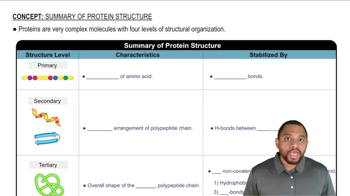
Summary of Protein Structure Concept 1

Denaturation

Denaturation is the process by which proteins lose their native structure due to external stressors, such as heat, pH changes, or chemical agents like HgCl₂. This process can disrupt secondary and tertiary structures, leading to loss of function. In the context of seed treatment, denaturation can prevent spoilage by inactivating enzymes and pathogens, thereby preserving the seeds.
추천 영상:
가이드 코스
1:17
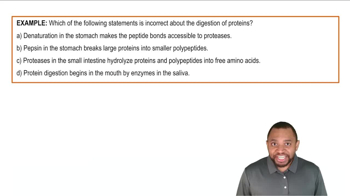
Digestion of Proteins Example 1

Mercuric Chloride (HgCl₂) as a Preservative

Mercuric chloride (HgCl₂) is a chemical compound used as a preservative and disinfectant due to its ability to denature proteins and kill microorganisms. When seeds are treated with HgCl₂, it alters the protein structures within the seeds, effectively preventing spoilage by inhibiting microbial growth. Understanding its mechanism helps in evaluating its effectiveness and potential risks in agricultural practices.
추천 영상:
가이드 코스
03:28
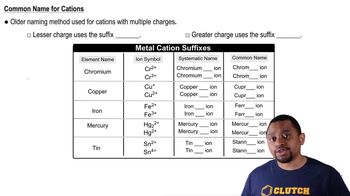
Naming Monoatomic Cations Concept 2