Ch.16 Amino Acids, Proteins, and Enzymes
Timberlake - Chemistry: An Introduction to General, Organic, and Biological Chemistry 14th Edition
Timberlake14th EditionChemistry: An Introduction to General, Organic, and Biological ChemistryISBN: 9781292472249당신이 사용하는 게 아니라요?교과서 변경
16장, 문제 49b

Methanol and ethanol are oxidized by alcohol dehydrogenase. In methanol poisoning, ethanol is given intravenously to prevent the formation of formaldehyde that has toxic effects.
b. Would ethanol compete for the active site or bind to a different site?

검증된 단계별 안내
1
Understand the role of alcohol dehydrogenase: Alcohol dehydrogenase is an enzyme that catalyzes the oxidation of alcohols. It converts methanol into formaldehyde and ethanol into acetaldehyde. Formaldehyde is toxic, so preventing its formation is critical in methanol poisoning.
Recognize the concept of competitive inhibition: Ethanol is administered because it acts as a competitive inhibitor. A competitive inhibitor competes with the substrate (in this case, methanol) for the active site of the enzyme.
Explain how ethanol competes: Ethanol and methanol are structurally similar molecules. Because of this similarity, ethanol can bind to the active site of alcohol dehydrogenase, preventing methanol from binding and being converted into formaldehyde.
Clarify the mechanism: When ethanol occupies the active site, it prevents methanol from being oxidized. This allows methanol to be excreted from the body without being converted into its toxic metabolite, formaldehyde.
Conclude the answer: Ethanol competes for the active site of alcohol dehydrogenase rather than binding to a different site. This competitive inhibition is the basis for its use in treating methanol poisoning.

비슷한 문제에 대한 검증된 영상 답변:

이 영상 해법은 위 문제에 도움이 된다고 튜터들이 추천한 것입니다.
영상 길이:
1m
도움이 되었나요?

주요 개념

질문에 올바르게 답하기 위해 반드시 이해해야 하는 핵심 개념들은 다음과 같습니다.

Alcohol Dehydrogenase

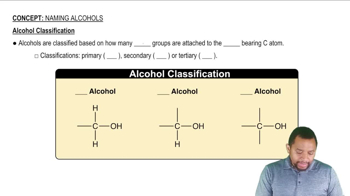
Alcohol dehydrogenase is an enzyme that catalyzes the oxidation of alcohols, converting them into aldehydes or ketones. In the context of methanol and ethanol, this enzyme plays a crucial role in metabolizing these substances in the liver. Understanding its function is essential for grasping how ethanol can mitigate the toxic effects of methanol by competing for the same metabolic pathway.
추천 영상:
가이드 코스
1:10
Alcohol Classification Concept 2

Competitive Inhibition

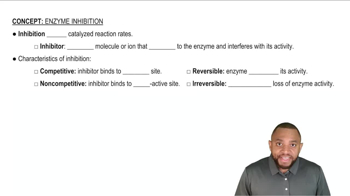
Competitive inhibition occurs when a substance, such as ethanol, competes with a substrate (methanol) for binding to the active site of an enzyme. This type of inhibition can effectively reduce the rate of reaction for the original substrate, thereby preventing the formation of toxic metabolites like formaldehyde. Recognizing this concept is vital to understanding how ethanol is used therapeutically in methanol poisoning.
추천 영상:
가이드 코스
1:19
Enzyme Inhibition Concept 1

Toxic Metabolites

Toxic metabolites are harmful byproducts formed during the metabolism of substances like methanol. In this case, methanol is converted into formaldehyde and formic acid, both of which are highly toxic. Understanding the nature of these metabolites helps clarify the urgency of treating methanol poisoning with ethanol, which prevents their formation by inhibiting the enzyme responsible for their production.
추천 영상:
가이드 코스
3:30
Gluconeogenesis Concept 12