Ch.17 Nucleic Acids and Protein Synthesis
Timberlake - Chemistry: An Introduction to General, Organic, and Biological Chemistry 14th Edition
Timberlake14th EditionChemistry: An Introduction to General, Organic, and Biological ChemistryISBN: 9781292472249당신이 사용하는 게 아니라요?교과서 변경
17장, 문제 92d

Suppose a mutation occurs in the DNA section in problem 17.89, and the first base in the parent chain, adenine, is replaced by guanine.
d. What effect, if any, might this mutation have on the structure and/or function of the resulting protein?

검증된 단계별 안내
1
Understand the context of the problem: DNA mutations can alter the sequence of nucleotides, which may affect the mRNA transcript during transcription and subsequently the protein during translation. In this case, adenine (A) is replaced by guanine (G).
Recall the central dogma of molecular biology: DNA is transcribed into mRNA, and mRNA is translated into a protein. A change in the DNA sequence can lead to a change in the codon sequence of mRNA, potentially altering the amino acid sequence of the protein.
Identify the specific codon affected by the mutation: Determine the original codon containing adenine and the new codon after guanine replaces adenine. Use the genetic code table to find the corresponding amino acids for both codons.
Analyze the impact on the protein structure: If the mutation results in a different amino acid, it is called a missense mutation. This can affect the protein's folding, stability, or function. If the mutation results in a stop codon, it is called a nonsense mutation, which can truncate the protein and render it nonfunctional.
Consider the functional consequences: Depending on the location of the mutation within the protein (e.g., active site, binding site), the change in amino acid could disrupt the protein's ability to perform its biological function. Alternatively, the mutation might have no significant effect if the amino acid change is conservative or occurs in a non-critical region.

비슷한 문제에 대한 검증된 영상 답변:

이 영상 해법은 위 문제에 도움이 된다고 튜터들이 추천한 것입니다.
영상 길이:
7m
도움이 되었나요?

주요 개념

질문에 올바르게 답하기 위해 반드시 이해해야 하는 핵심 개념들은 다음과 같습니다.

Mutation

A mutation is a change in the DNA sequence that can alter the genetic information. This can occur through various mechanisms, such as substitution, insertion, or deletion of nucleotides. In this case, the substitution of adenine with guanine may lead to changes in the amino acid sequence of the resulting protein, potentially affecting its structure and function.

Protein Structure

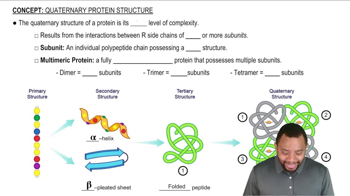
Protein structure refers to the three-dimensional arrangement of amino acids in a protein, which is crucial for its function. Proteins have four levels of structure: primary (amino acid sequence), secondary (local folding), tertiary (overall 3D shape), and quaternary (multiple polypeptide chains). A mutation can disrupt these structures, leading to loss of function or altered activity.
추천 영상:
가이드 코스
3:26
Quaternary Protein Structure Concept 1

Codon and Amino Acid Translation

Codons are sequences of three nucleotides in mRNA that correspond to specific amino acids during protein synthesis. A mutation that changes a nucleotide can result in a different codon, potentially leading to the incorporation of a different amino acid in the protein. This change can significantly impact the protein's properties and its biological role.
추천 영상:
가이드 코스
1:30
Introduction to Translation Example 1