Ch.18 Metabolic Pathways and ATP Production
Timberlake - Chemistry: An Introduction to General, Organic, and Biological Chemistry 14th Edition
Timberlake14th EditionChemistry: An Introduction to General, Organic, and Biological ChemistryISBN: 9781292472249당신이 사용하는 게 아니라요?교과서 변경
18장, 문제 44

What happens to the energy level as electrons are passed along in electron transport?

검증된 단계별 안내
1
Understand the concept of electron transport: Electron transport occurs in the mitochondria during cellular respiration, specifically in the electron transport chain (ETC). Electrons are transferred through a series of protein complexes embedded in the inner mitochondrial membrane.
Recognize the role of energy levels: As electrons move through the electron transport chain, they are passed from one protein complex to another. Each transfer involves a change in energy level, as electrons move from higher-energy states to lower-energy states.
Explain the energy release: The decrease in energy level as electrons are passed along the chain is used to pump protons (H⁺ ions) across the mitochondrial membrane, creating a proton gradient. This gradient is essential for ATP synthesis.
Connect to ATP production: The energy stored in the proton gradient is harnessed by ATP synthase to convert ADP and inorganic phosphate (Pi) into ATP, the primary energy currency of the cell.
Summarize the process: The electron transport chain is a mechanism for converting the energy from high-energy electrons into a usable form (ATP) by systematically lowering their energy level and utilizing the released energy for cellular work.

비슷한 문제에 대한 검증된 영상 답변:

이 영상 해법은 위 문제에 도움이 된다고 튜터들이 추천한 것입니다.
영상 길이:
34s
도움이 되었나요?

주요 개념

질문에 올바르게 답하기 위해 반드시 이해해야 하는 핵심 개념들은 다음과 같습니다.

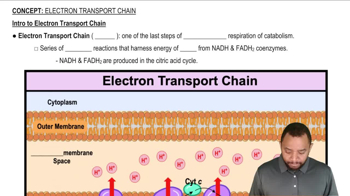
Electron Transport Chain

The electron transport chain (ETC) is a series of protein complexes and other molecules located in the inner mitochondrial membrane. It facilitates the transfer of electrons from electron donors like NADH and FADH2 to electron acceptors, ultimately leading to the production of ATP. As electrons move through the chain, they release energy, which is used to pump protons across the membrane, creating a proton gradient.
추천 영상:
가이드 코스
3:10
Intro to Electron Transport Chain Concept 1

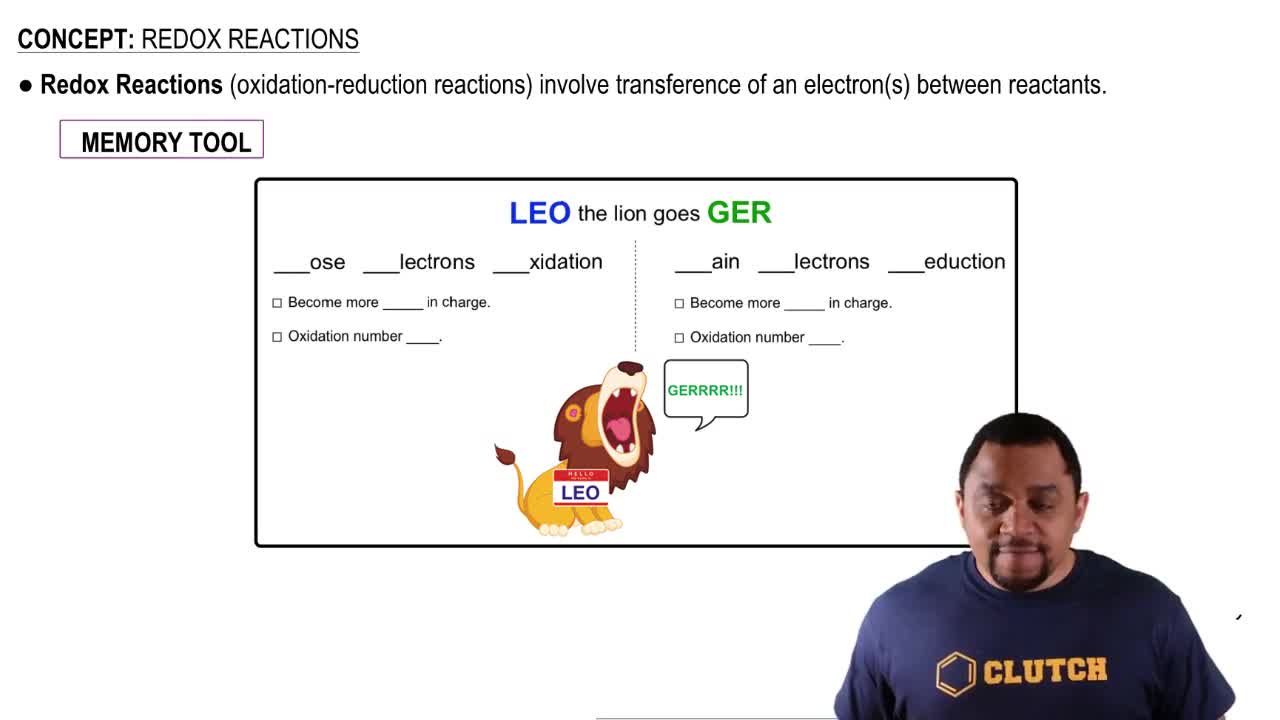
Energy Levels and Redox Reactions

In the context of the electron transport chain, energy levels refer to the potential energy associated with electrons as they undergo redox reactions. As electrons are transferred from higher to lower energy states, energy is released. This energy is harnessed to perform work, such as synthesizing ATP, and is a fundamental principle of cellular respiration.
추천 영상:
가이드 코스
01:53
Redox Reactions

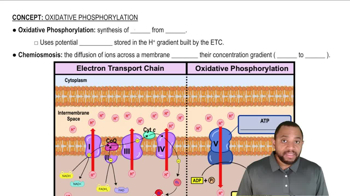
Proton Gradient and Chemiosmosis

The proton gradient created by the electron transport chain is essential for chemiosmosis, a process that generates ATP. As protons are pumped into the intermembrane space, a concentration gradient forms, driving protons back into the mitochondrial matrix through ATP synthase. This flow of protons provides the energy needed to convert ADP and inorganic phosphate into ATP, linking electron transport to energy production.
추천 영상:
가이드 코스
2:37
Oxidative Phosphorylation Concept 1