Ch.4 Atoms and Elements
Timberlake - Chemistry: An Introduction to General, Organic, and Biological Chemistry 14th Edition
Timberlake14th EditionChemistry: An Introduction to General, Organic, and Biological ChemistryISBN: 9781292472249당신이 사용하는 게 아니라요?교과서 변경
4장, 문제 9a

Identify the group or period number described by each of the following:
a. contains C, N, and O

검증된 단계별 안내
1
Step 1: Recall that the periodic table is organized into groups (vertical columns) and periods (horizontal rows). Groups are numbered from 1 to 18, and periods are numbered from 1 to 7.
Step 2: Identify the elements mentioned in the problem: C (Carbon), N (Nitrogen), and O (Oxygen). Locate these elements on the periodic table.
Step 3: Observe that C, N, and O are all located in the same period (horizontal row) of the periodic table. Determine the period number by counting the rows from the top.
Step 4: Notice that these elements are also in different groups (vertical columns). Carbon is in Group 14, Nitrogen is in Group 15, and Oxygen is in Group 16. Confirm the group numbers by checking the periodic table.
Step 5: Summarize the findings: The elements C, N, and O are in Period 2 of the periodic table, and their respective groups are 14, 15, and 16.

비슷한 문제에 대한 검증된 영상 답변:

이 영상 해법은 위 문제에 도움이 된다고 튜터들이 추천한 것입니다.
영상 길이:
1m
도움이 되었나요?

주요 개념

질문에 올바르게 답하기 위해 반드시 이해해야 하는 핵심 개념들은 다음과 같습니다.

Group 14 (IVA) Elements

Group 14 of the periodic table, also known as the carbon group, includes carbon (C), silicon (Si), germanium (Ge), tin (Sn), lead (Pb), and flerovium (Fl). This group is characterized by having four valence electrons, which allows for a variety of bonding configurations. Carbon, in particular, is essential for organic chemistry and life, while silicon is crucial in technology and electronics.
추천 영상:
가이드 코스
07:38
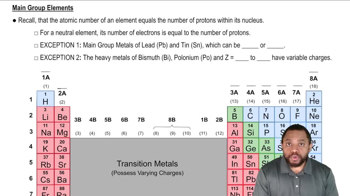
Periodic Table: Main Group Element Charges Concept 2

Group 15 (VA) Elements

Group 15 of the periodic table, known as the nitrogen group, includes nitrogen (N), phosphorus (P), arsenic (As), antimony (Sb), and bismuth (Bi). These elements typically have five valence electrons, leading to diverse chemical behaviors. Nitrogen is vital for biological processes, while phosphorus is key in energy transfer and DNA structure.
추천 영상:
가이드 코스
07:38
Periodic Table: Main Group Element Charges Concept 2

Group 16 (VIA) Elements

Group 16, or the chalcogens, consists of oxygen (O), sulfur (S), selenium (Se), tellurium (Te), and polonium (Po). These elements have six valence electrons, which influences their reactivity and the types of compounds they form. Oxygen is essential for respiration in living organisms and is a key component of water, while sulfur is important in various industrial processes.
추천 영상:
가이드 코스
07:38
Periodic Table: Main Group Element Charges Concept 2