Ch.4 Atoms and Elements
Timberlake - Chemistry: An Introduction to General, Organic, and Biological Chemistry 14th Edition
Timberlake14th EditionChemistry: An Introduction to General, Organic, and Biological ChemistryISBN: 9781292472249당신이 사용하는 게 아니라요?교과서 변경
4장, 문제 75c

Which statements completed with a to e will be true and which will be false?
An atom of N compared to an atom of Li has a larger (greater)
c. number of protons

검증된 단계별 안내
1
Step 1: Understand the question. The problem asks us to compare the number of protons in an atom of nitrogen (N) and an atom of lithium (Li) to determine if the statement is true or false.
Step 2: Recall the definition of protons. Protons are positively charged particles found in the nucleus of an atom. The number of protons in an atom is equal to its atomic number, which is unique for each element.
Step 3: Look up the atomic numbers of nitrogen (N) and lithium (Li) on the periodic table. Nitrogen has an atomic number of 7, meaning it has 7 protons. Lithium has an atomic number of 3, meaning it has 3 protons.
Step 4: Compare the number of protons in nitrogen and lithium. Since 7 (protons in N) is greater than 3 (protons in Li), the statement 'An atom of N compared to an atom of Li has a larger number of protons' is true.
Step 5: Conclude that the statement completed with 'c. number of protons' is true based on the comparison of atomic numbers.

비슷한 문제에 대한 검증된 영상 답변:

이 영상 해법은 위 문제에 도움이 된다고 튜터들이 추천한 것입니다.
영상 길이:
1m
도움이 되었나요?

주요 개념

질문에 올바르게 답하기 위해 반드시 이해해야 하는 핵심 개념들은 다음과 같습니다.

Atomic Structure

Atomic structure refers to the composition of an atom, which includes protons, neutrons, and electrons. Protons are positively charged particles found in the nucleus, while neutrons are neutral. The number of protons in an atom defines its atomic number and determines the element's identity. For example, nitrogen (N) has 7 protons, while lithium (Li) has 3 protons.
추천 영상:

Atomic Number

The atomic number is the number of protons in the nucleus of an atom and is unique to each element. It determines the element's position in the periodic table and its chemical properties. For instance, nitrogen's atomic number is 7, indicating it has 7 protons, while lithium's atomic number is 3, indicating it has 3 protons. This concept is crucial for comparing elements.
추천 영상:
가이드 코스
02:42
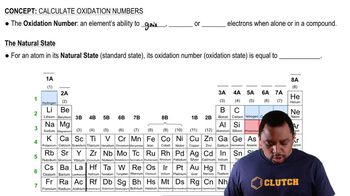
Calculate Oxidation Numbers

Comparison of Elements

When comparing elements, one often looks at their atomic properties, such as the number of protons, neutrons, and electrons. In this context, comparing nitrogen and lithium involves examining their atomic numbers and understanding how these differences affect their chemical behavior. For example, since nitrogen has more protons than lithium, it has a greater atomic number, which influences its reactivity and bonding characteristics.
추천 영상:
가이드 코스
01:14
Valence Electrons of Elements (Simplified) Example 1