Calculate the molar mass for each of the following:
b. C₃H₆O₃
검증된 단계별 안내
1
Identify the elements present in the compound C₃H₆O₃: Carbon (C), Hydrogen (H), and Oxygen (O).
Determine the number of each type of atom in the compound: 3 Carbon atoms, 6 Hydrogen atoms, and 3 Oxygen atoms.
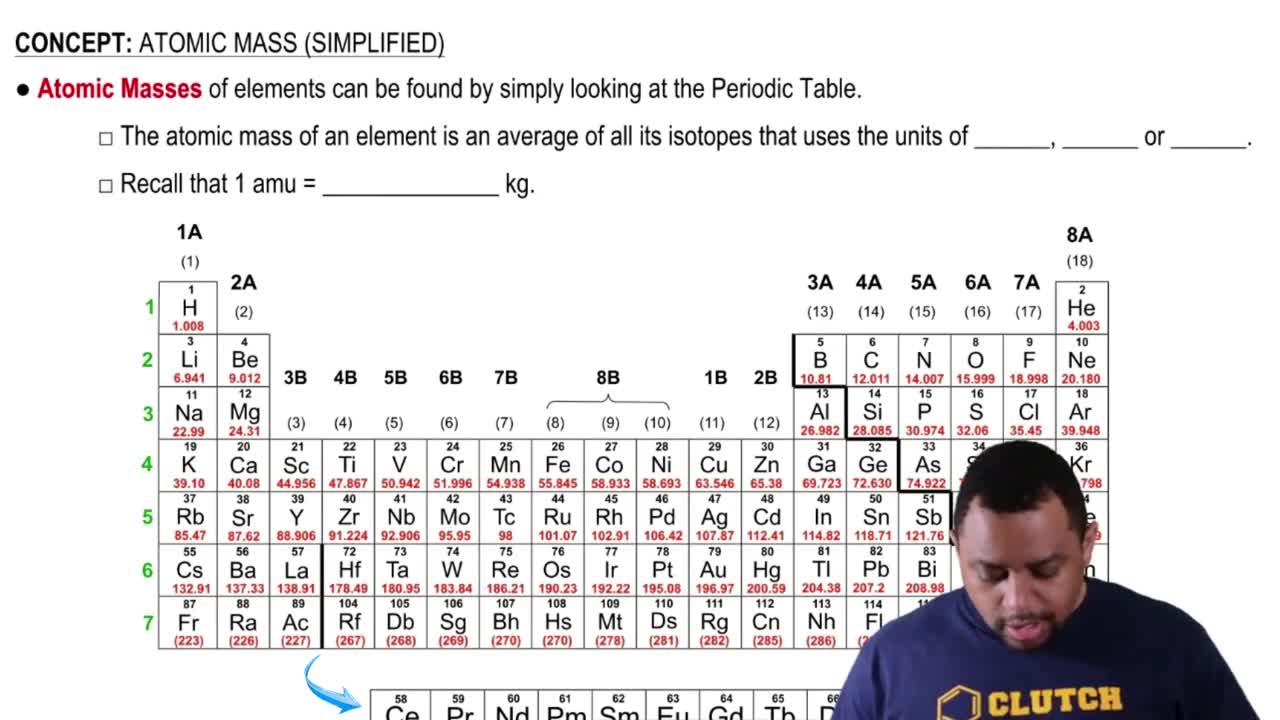
Find the atomic mass of each element from the periodic table: Carbon (C) is approximately 12.01 g/mol, Hydrogen (H) is approximately 1.01 g/mol, and Oxygen (O) is approximately 16.00 g/mol.
Calculate the total mass contributed by each element: Multiply the atomic mass of each element by the number of atoms of that element in the compound.
Add the total masses of all elements to find the molar mass of C₃H₆O₃.
비슷한 문제에 대한 검증된 영상 답변:
이 영상 해법은 위 문제에 도움이 된다고 튜터들이 추천한 것입니다.
영상 길이:
1m
영상 재생:
0 댓글
주요 개념
질문에 올바르게 답하기 위해 반드시 이해해야 하는 핵심 개념들은 다음과 같습니다.
Molar Mass
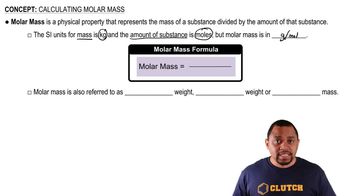
Molar mass is the mass of one mole of a substance, typically expressed in grams per mole (g/mol). It is calculated by summing the atomic masses of all the atoms in a chemical formula. For example, in C₃H₆O₃, the molar mass is determined by adding the masses of three carbon (C), six hydrogen (H), and three oxygen (O) atoms.
Atomic mass is the weighted average mass of an element's isotopes, measured in atomic mass units (amu). Each element has a specific atomic mass that can be found on the periodic table. For calculating molar mass, the atomic masses of carbon (approximately 12.01 amu), hydrogen (approximately 1.01 amu), and oxygen (approximately 16.00 amu) are used to find the total mass of the compound.
A chemical formula represents the composition of a compound using symbols for the elements and numerical subscripts to indicate the number of each type of atom present. In the case of C₃H₆O₃, the formula indicates that the compound contains three carbon atoms, six hydrogen atoms, and three oxygen atoms. Understanding the chemical formula is essential for calculating the molar mass accurately.

 1:31분
1:31분 검증된 단계별 안내
 01:10
01:10