Identify each of the following as a physical or chemical change: (3.2)
a. Aspirin tablets are broken in half.
검증된 단계별 안내
1
Understand the difference between physical and chemical changes. A physical change involves a change in physical properties without altering the substance's chemical identity, while a chemical change results in the formation of new substances with different chemical properties.
Consider the process described: breaking aspirin tablets in half.
Determine if the chemical composition of the aspirin changes when it is broken. In this case, breaking the tablets does not alter the chemical structure of the aspirin molecules.
Recognize that breaking a substance into smaller pieces is typically a physical change because it does not involve a change in the chemical identity of the substance.
Conclude that breaking aspirin tablets in half is a physical change.
비슷한 문제에 대한 검증된 영상 답변:
이 영상 해법은 위 문제에 도움이 된다고 튜터들이 추천한 것입니다.
영상 길이:
2m
영상 재생:
0 댓글
주요 개념
질문에 올바르게 답하기 위해 반드시 이해해야 하는 핵심 개념들은 다음과 같습니다.
Physical Change
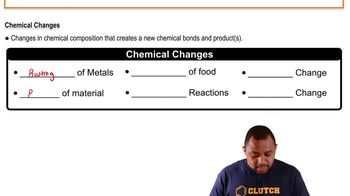
A physical change involves a transformation that does not alter the chemical composition of a substance. Examples include changes in state, shape, or size, such as melting, freezing, or breaking. In the case of aspirin tablets being broken in half, the chemical structure of the aspirin remains unchanged, making it a physical change.
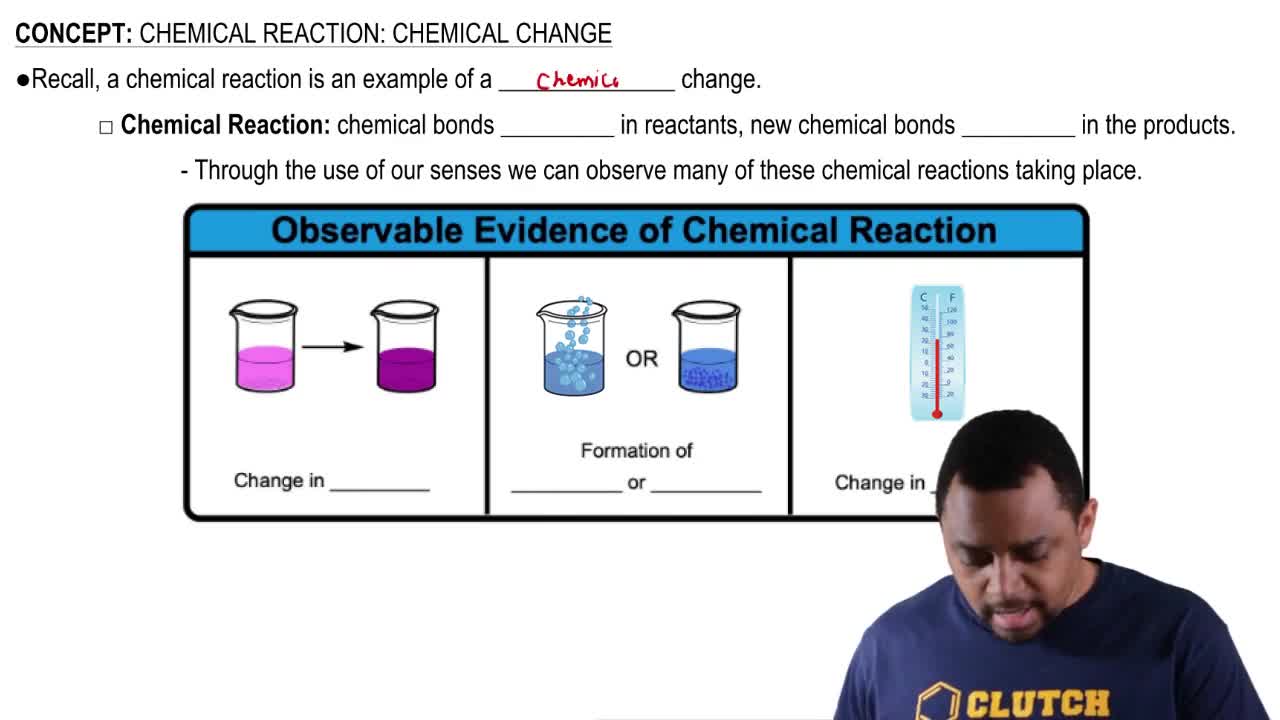
A chemical change results in the formation of one or more new substances with different chemical properties. This process often involves a chemical reaction, where bonds between atoms are broken and formed. Unlike physical changes, chemical changes are usually irreversible under normal conditions, such as burning or rusting.
To distinguish between physical and chemical changes, one can assess whether the substance's identity is altered. If the change can be reversed and the original substance can be recovered, it is likely a physical change. Conversely, if new substances are produced and the original cannot be easily restored, it indicates a chemical change.

 2:28분
2:28분 검증된 단계별 안내
 01:41
01:41