After a week, biochemical reactions in compost slow, and the temperature drops to 45 °C. The dark brown organic-rich mixture is ready for use in the garden. What is this temperature in degrees Fahrenheit? In kelvins? (3.3)
검증된 단계별 안내
1
Start by converting the temperature from degrees Celsius to degrees Fahrenheit using the formula: \( F = \frac{9}{5}C + 32 \).
Substitute the given temperature in Celsius (45 °C) into the formula: \( F = \frac{9}{5} \times 45 + 32 \).
Calculate the result of the multiplication and addition to find the temperature in degrees Fahrenheit.
Next, convert the temperature from degrees Celsius to kelvins using the formula: \( K = C + 273.15 \).
Substitute the given temperature in Celsius (45 °C) into the formula: \( K = 45 + 273.15 \) and calculate the result.
비슷한 문제에 대한 검증된 영상 답변:
이 영상 해법은 위 문제에 도움이 된다고 튜터들이 추천한 것입니다.
영상 길이:
3m
영상 재생:
0 댓글
주요 개념
질문에 올바르게 답하기 위해 반드시 이해해야 하는 핵심 개념들은 다음과 같습니다.
Temperature Conversion
Temperature can be expressed in different scales, primarily Celsius, Fahrenheit, and Kelvin. To convert Celsius to Fahrenheit, use the formula F = (C × 9/5) + 32. For Kelvin, the conversion is K = C + 273.15. Understanding these conversions is essential for accurately interpreting temperature readings in various contexts.
Biochemical reactions are processes that occur within living organisms, involving the transformation of substances through enzymatic activity. These reactions are temperature-sensitive, meaning that as temperature changes, the rate of these reactions can slow down or speed up, affecting the overall process, such as composting.
Composting is the natural decomposition of organic matter, such as food scraps and yard waste, facilitated by microorganisms. The process generates heat, which helps to break down materials, but as it progresses, the temperature can drop, indicating a slowdown in microbial activity. Understanding this process is crucial for effective gardening and soil enrichment.

 3:06분
3:06분 검증된 단계별 안내
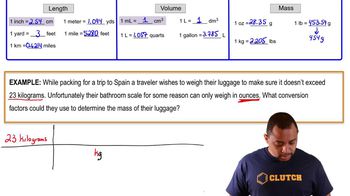
 03:45
03:45