Give the symbol of the element that has the (4.7)
b. largest atomic size in Period 4
검증된 단계별 안내
1
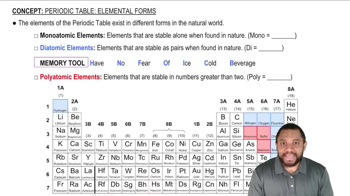
Identify the elements in Period 4 of the periodic table. Period 4 includes elements from potassium (K) to krypton (Kr).
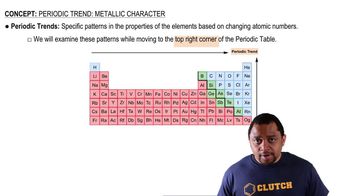
Recall that atomic size generally decreases across a period from left to right due to increasing nuclear charge, which pulls the electrons closer to the nucleus.
Determine which element is located at the far left of Period 4, as elements on the left side of the periodic table typically have larger atomic sizes.
Recognize that the element with the largest atomic size in Period 4 is the one with the lowest atomic number in that period.
Conclude that the element with the largest atomic size in Period 4 is potassium (K), as it is the first element in that period.
비슷한 문제에 대한 검증된 영상 답변:
이 영상 해법은 위 문제에 도움이 된다고 튜터들이 추천한 것입니다.
영상 길이:
3m
영상 재생:
0 댓글
주요 개념
질문에 올바르게 답하기 위해 반드시 이해해야 하는 핵심 개념들은 다음과 같습니다.
Atomic Size
Atomic size, or atomic radius, refers to the distance from the nucleus of an atom to the outermost shell of electrons. It generally increases down a group in the periodic table due to the addition of electron shells, while it decreases across a period from left to right due to increased nuclear charge, which pulls electrons closer to the nucleus.
The periodic table displays trends in atomic properties, including atomic size, ionization energy, and electronegativity. Understanding these trends is crucial for predicting the behavior of elements. For instance, in Period 4, elements like potassium (K) have larger atomic sizes compared to those on the right, such as krypton (Kr), due to their position in the table.
Period 4 of the periodic table includes elements from potassium (K) to krypton (Kr). The largest atomic size in this period is typically found in the alkali metals, with potassium being the largest. This is due to its lower effective nuclear charge compared to the other elements in the same period, resulting in a larger atomic radius.

 3:33분
3:33분 검증된 단계별 안내

 05:22
05:22