Consider an ion with the symbol X²⁺ formed from a representative element. (6.1, 6.2, 6.3)
c. If X is in Period 3, what is the element?
검증된 단계별 안내
1
Identify the charge of the ion, which is X²⁺, indicating that the element has lost 2 electrons.
Determine the group of the periodic table where elements typically form 2+ ions. These are usually found in Group 2 (alkaline earth metals) or Group 16 (chalcogens) when they lose electrons.
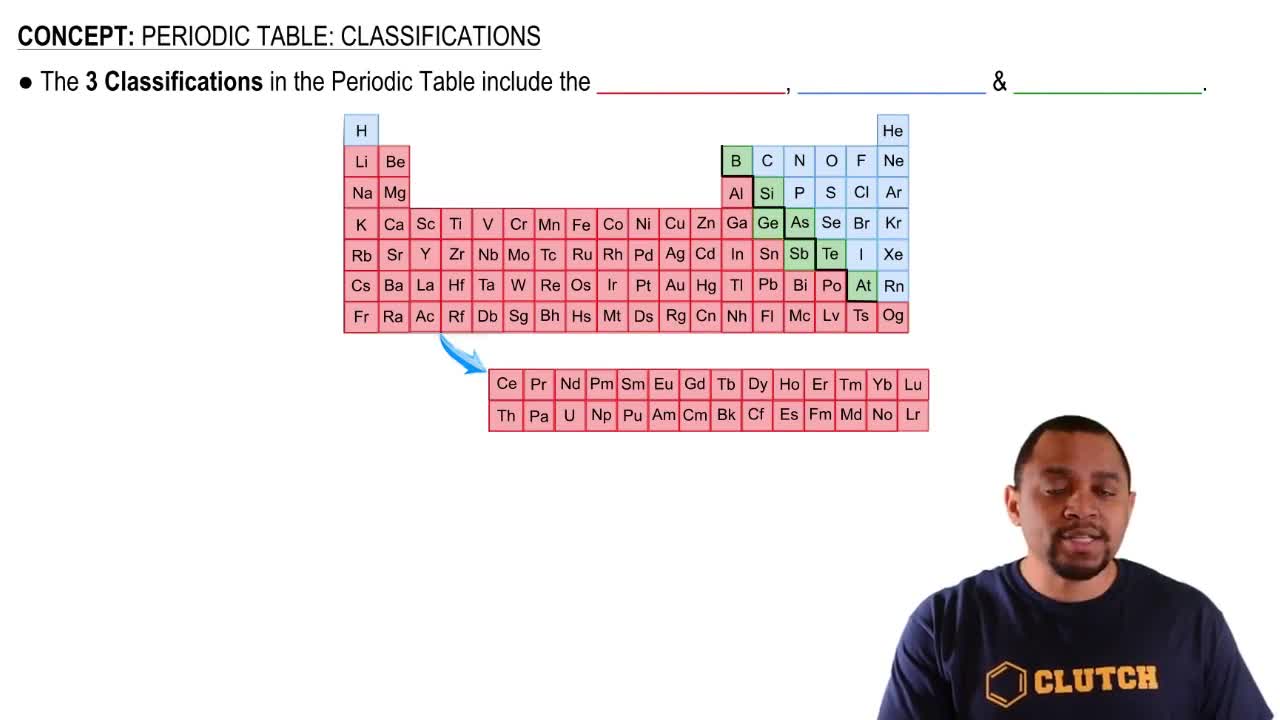
Since the element is in Period 3, list the elements in Period 3: Na, Mg, Al, Si, P, S, Cl, Ar.
Identify which of these elements typically forms a 2+ ion. In Period 3, magnesium (Mg) is the element that forms a 2+ ion by losing its two valence electrons.
Conclude that the element X in Period 3 that forms a X²⁺ ion is magnesium (Mg).
비슷한 문제에 대한 검증된 영상 답변:
이 영상 해법은 위 문제에 도움이 된다고 튜터들이 추천한 것입니다.
영상 길이:
3m
영상 재생:
0 댓글
주요 개념
질문에 올바르게 답하기 위해 반드시 이해해야 하는 핵심 개념들은 다음과 같습니다.
Ionic Charge
Ionic charge refers to the electrical charge that an atom or molecule carries due to the loss or gain of electrons. In this case, X²⁺ indicates that the element has lost two electrons, resulting in a positive charge. Understanding ionic charges is crucial for identifying elements and predicting their behavior in chemical reactions.
The periodic table organizes elements based on their atomic number and properties. Each horizontal row is called a period, and elements in the same period share similar energy levels. Knowing that X is in Period 3 helps narrow down the possible elements to those located in that specific row of the periodic table.
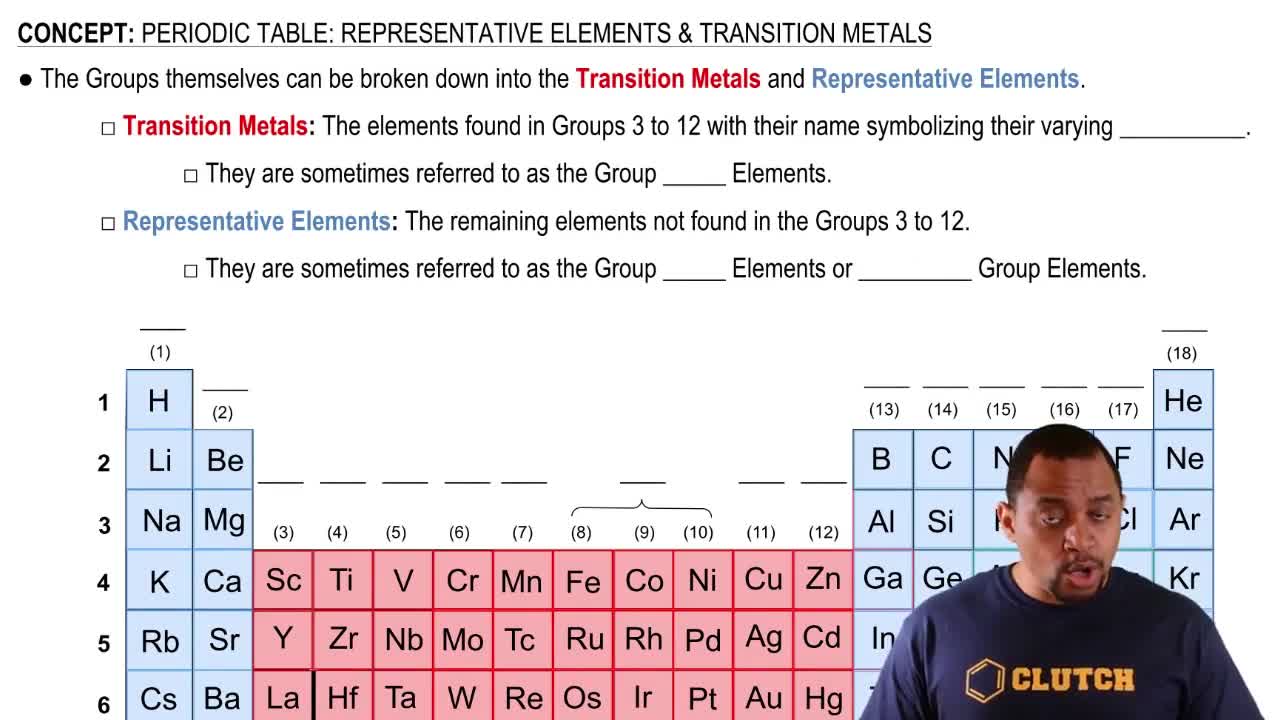
Representative elements, also known as main group elements, are found in groups 1, 2, and 13-18 of the periodic table. These elements typically exhibit a wide range of chemical and physical properties. Identifying X as a representative element in Period 3 allows us to focus on elements like sodium, magnesium, and aluminum, which are likely candidates for forming the X²⁺ ion.

 3:57분
3:57분 검증된 단계별 안내
 02:33
02:33