Write the name for each of the following ions (include the Roman numeral when necessary):
e. Au³⁺
검증된 단계별 안내
1
Identify the element symbol 'Au' which stands for gold.
Recognize that the ion has a charge of 3+, indicating it is a cation with a positive charge.
For transition metals like gold, use Roman numerals to indicate the charge of the ion.
The name of the ion is 'Gold(III)' where 'III' represents the 3+ charge.
Combine the element name and the Roman numeral to name the ion as 'Gold(III) ion'.
비슷한 문제에 대한 검증된 영상 답변:
이 영상 해법은 위 문제에 도움이 된다고 튜터들이 추천한 것입니다.
영상 길이:
51s
영상 재생:
0 댓글
주요 개념
질문에 올바르게 답하기 위해 반드시 이해해야 하는 핵심 개념들은 다음과 같습니다.
Ionic Charge
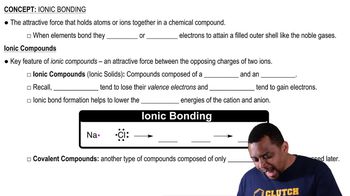
Ionic charge refers to the electrical charge that an ion carries, which is determined by the loss or gain of electrons. In the case of Au³⁺, the '³⁺' indicates that the gold ion has lost three electrons, resulting in a positive charge. Understanding ionic charge is essential for naming ions correctly, as it influences the Roman numeral notation used in naming.
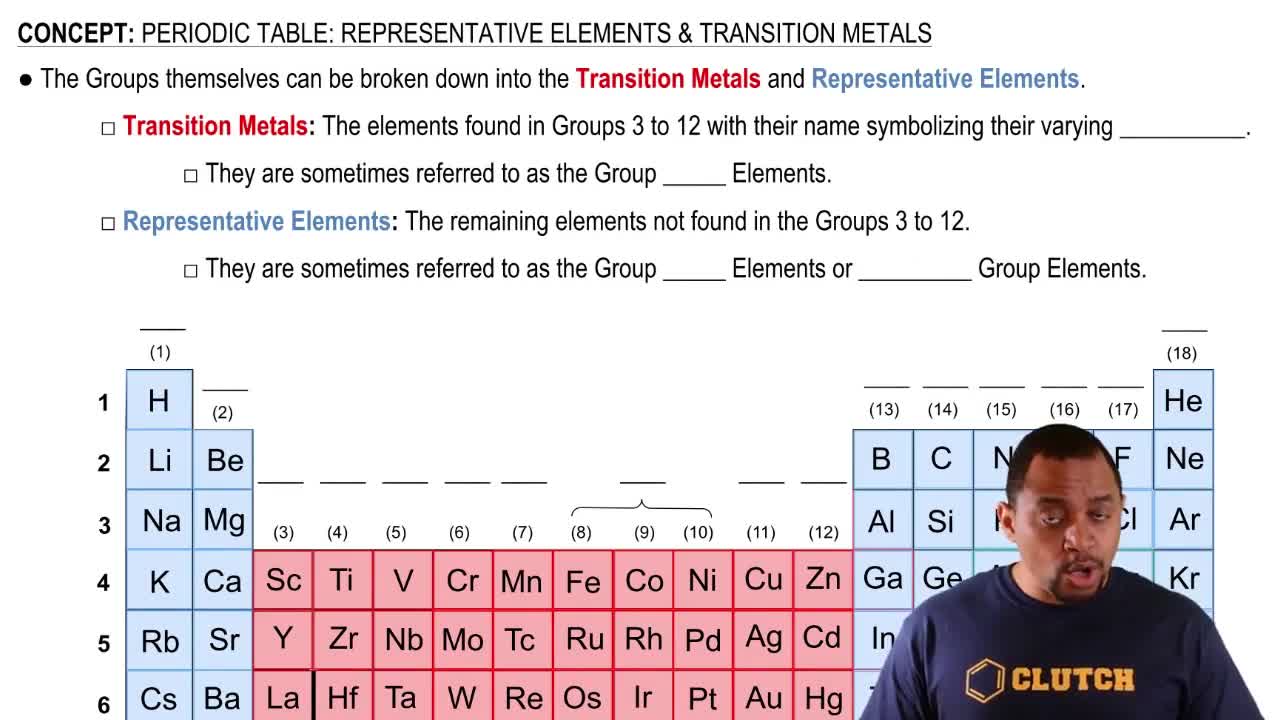
Transition metals are elements found in the d-block of the periodic table, known for their ability to form various oxidation states. Gold (Au) is a transition metal that can exhibit multiple oxidation states, including +1, +3, and others. Recognizing that transition metals often require Roman numerals in their names helps in accurately identifying their ionic forms.
Periodic Table: Representative Elements & Transition Metals
Nomenclature of Ions
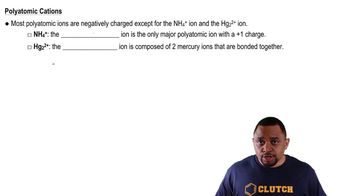
Nomenclature of ions involves the systematic naming of ions based on their charge and the elements they derive from. For cations, particularly transition metals, the name includes the element's name followed by a Roman numeral indicating its charge. For Au³⁺, the correct name is 'gold(III)' to reflect its +3 charge, which is crucial for clear communication in chemistry.

 0:51분
0:51분 검증된 단계별 안내
 02:33
02:33