Skip to main content
Introduction to Chemistry
나의 코스
배우기
시험 준비
AI 튜터
학습 가이드
플래시카드
탐험해 보세요
앱을 사용해 보세요
나의 코스
배우기
시험 준비
AI 튜터
학습 가이드
플래시카드
탐험해 보세요
앱을 사용해 보세요
뒤로
Galvanic Cell (Simplified) definitions
카드를 뒤집기 위해 탭할 수 있습니다.
Galvanic Cell
카드를 뒤집기 위해 탭할 수 있습니다.
👆
Galvanic Cell
A spontaneous electrochemical system that transforms stored chemical energy into electrical energy using two electrodes and a salt bridge.
진행 상황 추적
컨트롤 버튼이 '내비게이션' 모드로 변경되었습니다.
1/15
관련 플래시카드
관련 실천
추천 영상
Galvanic Cell (Simplified) quiz
Galvanic Cell (Simplified)
15 용어
Galvanic Cell (Simplified)
16. Oxidation and Reduction
5 문제점
주제
Balancing Redox Reactions: Basic Solutions
16. Oxidation and Reduction
5 문제점
주제
16. Oxidation and Reduction
6 주제
15 문제점
장
VideoThumbView.guidedCourse
02:41
Galvanic Cell (Simplified) Example 2
2766
views
2
rank
VideoThumbView.guidedCourse
03:20
Galvanic Cell (Simplified) Concept 3
2782
views
VideoThumbView.guidedCourse
01:02
Galvanic Cell (Simplified) Example 4
2405
views
이 집합의 용어 (15)
하이드의 정의
Galvanic Cell
A spontaneous electrochemical system that transforms stored chemical energy into electrical energy using two electrodes and a salt bridge.
Voltaic Cell
Another name for a spontaneous electrochemical device that generates electricity from chemical reactions, functioning as a battery.
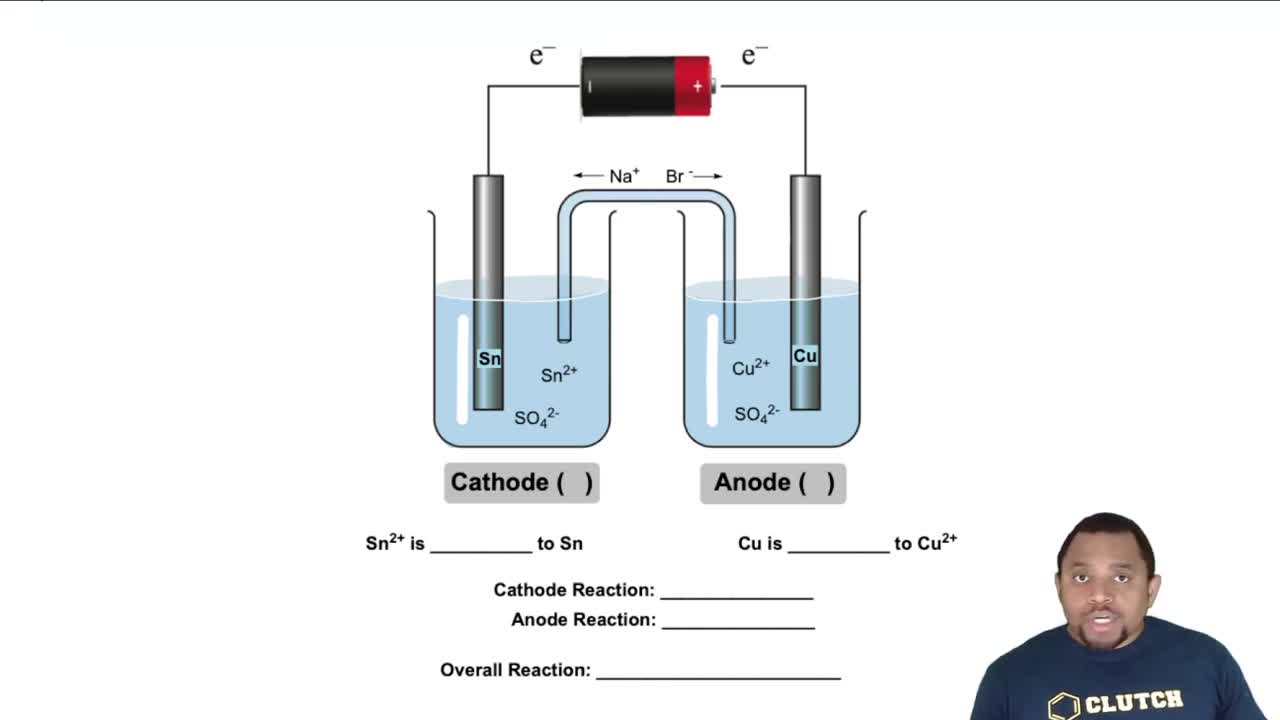
Electrolytic Cell
A non-spontaneous electrochemical system that requires external electrical energy to drive chemical reactions, often using a battery.
Anode
The electrode where oxidation occurs, electrons are lost, and in a galvanic cell, it carries a negative charge.
Cathode
The electrode where reduction occurs, electrons are gained, and in a galvanic cell, it carries a positive charge.
Oxidation
A process at the anode involving the loss of electrons from a substance, leading to an increase in oxidation state.
Reduction
A process at the cathode involving the gain of electrons by a substance, resulting in a decrease in oxidation state.
Salt Bridge
A tube connecting two half-cells, allowing ion flow to complete the circuit and maintain charge balance without mixing solutions.
Electrode
A solid conductor, such as a metal, that serves as a site for oxidation or reduction within an electrochemical cell.
Voltmeter
A device used to measure the electrical potential difference generated by an electrochemical cell.
Electron Flow
The movement of electrons from the anode to the cathode, responsible for generating electrical current in the cell.
Neutral Ion
An ion in solution that does not exhibit acidic or basic properties, essential for proper function of the salt bridge.
Battery
A device that either generates electricity from chemical reactions (galvanic) or supplies energy to drive non-spontaneous reactions (electrolytic).
Half-Cell
A compartment containing an electrode and its solution, representing either the oxidation or reduction part of an electrochemical cell.
Electrolysis
A process in which electrical energy is used to drive a non-spontaneous chemical reaction, as seen in electrolytic cells.
 뒤로뒤로
뒤로뒤로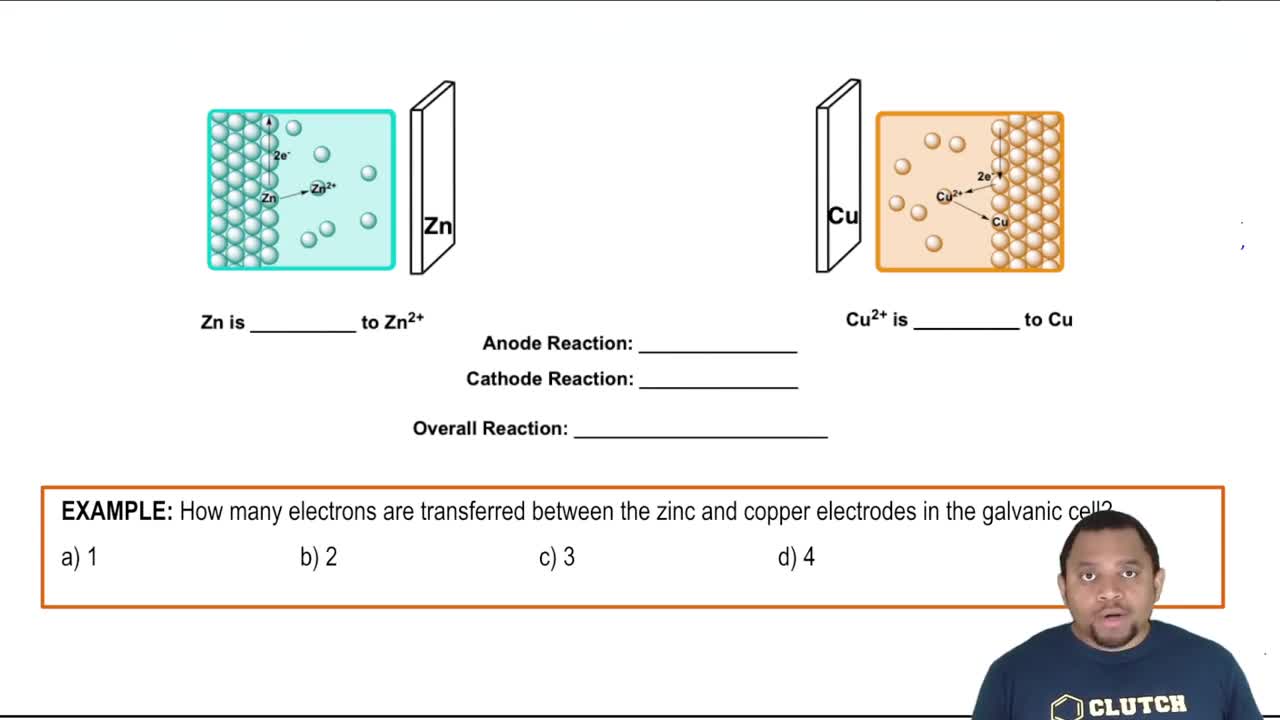
 02:41
02:41