Skip to main content
Introduction to Chemistry
나의 코스
배우기
시험 준비
AI 튜터
학습 가이드
플래시카드
탐험해 보세요
앱을 사용해 보세요
나의 코스
배우기
시험 준비
AI 튜터
학습 가이드
플래시카드
탐험해 보세요
앱을 사용해 보세요
뒤로
Physical & Chemical Changes definitions
카드를 뒤집기 위해 탭할 수 있습니다.
Physical Change
카드를 뒤집기 위해 탭할 수 있습니다.
👆
Physical Change
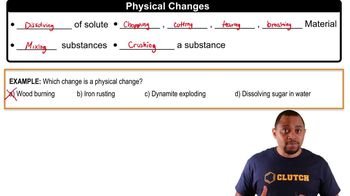
A transformation that alters appearance or state but keeps the substance's composition and identity unchanged.
진행 상황 추적
컨트롤 버튼이 '내비게이션' 모드로 변경되었습니다.
1/17
관련 플래시카드
관련 실천
추천 영상
Physical & Chemical Changes quiz
Physical & Chemical Changes
15 용어
Physical & Chemical Changes
3. Matter and Energy
5 문제점
주제
Chemical Properties
3. Matter and Energy
5 문제점
주제
3. Matter and Energy - Part 1 of 2
12 주제
34 문제점
장
3. Matter and Energy - Part 2 of 2
1 주제
3 문제점
장
VideoThumbView.guidedCourse
01:52
Physical & Chemical Changes Example 2
11810
views
196
rank
VideoThumbView.guidedCourse
03:42
Reversible Changes in Matter
11835
views
187
rank
1
comments
VideoThumbView.guidedCourse
01:52
Physical & Chemical Changes Example 1
14374
views
289
rank
이 집합의 용어 (17)
하이드의 정의
Physical Change
A transformation that alters appearance or state but keeps the substance's composition and identity unchanged.
Chemical Change
A process resulting in new substances with different chemical compositions and properties from the original.
Solute
A component that becomes dispersed within a liquid, forming a solution without altering its own chemical identity.
Mixing
A process where substances are combined physically, maintaining their individual identities and properties.
Crushing
A physical action that changes the shape or size of a material without affecting its chemical makeup.
Rusting
A reaction where metals interact with oxygen, producing metal oxides and altering the original material's identity.
Burning
A reaction involving rapid combination with oxygen, producing new substances and releasing energy.
Metabolism
A series of chemical processes in living organisms that convert food into different substances for energy and growth.
Phase Change
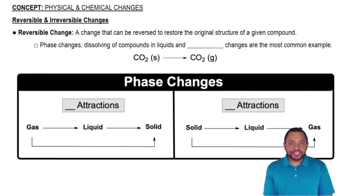
A transition between solid, liquid, and gas states, where the substance's identity remains constant.
Condensation
A process where a gas transforms into a liquid, often observed as droplets forming on cool surfaces.
Freezing
A transition from liquid to solid, typically occurring when temperature decreases below a substance's freezing point.
Deposition
A direct change from gas to solid, bypassing the liquid state, resulting in solid formation on surfaces.
Fusion
A term for compatible with melting, describing the transition from solid to liquid due to heat absorption.
Vaporization
A process where a liquid becomes a gas, either gradually or rapidly, depending on temperature and pressure.
Sublimation
A direct transition from solid to gas, skipping the liquid phase, as seen with substances like dry ice.
Irreversible Change
A transformation that permanently alters a material, preventing restoration to its original form under normal conditions.
Reversible Change
A process where the original material can be restored, typically involving physical or phase changes.
 뒤로뒤로
뒤로뒤로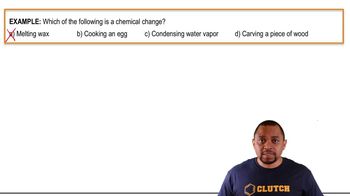
 01:52
01:52