Skip to main content
Introduction to Chemistry
나의 코스
배우기
시험 준비
AI 튜터
학습 가이드
플래시카드
탐험해 보세요
앱을 사용해 보세요
나의 코스
배우기
시험 준비
AI 튜터
학습 가이드
플래시카드
탐험해 보세요
앱을 사용해 보세요
뒤로
The Colligative Properties quiz
카드를 뒤집기 위해 탭할 수 있습니다.
What happens to the boiling point of a solvent when a solute is added?
카드를 뒤집기 위해 탭할 수 있습니다.
👆
What happens to the boiling point of a solvent when a solute is added?
The boiling point increases as more solute is added to the solvent.
진행 상황 추적
컨트롤 버튼이 '내비게이션' 모드로 변경되었습니다.
1/15
관련 플래시카드
관련 실천
추천 영상
The Colligative Properties definitions
The Colligative Properties
15 용어
The Colligative Properties
13. Solutions
5 문제점
주제
Boiling Point Elevation
13. Solutions
5 문제점
주제
13. Solutions - Part 1 of 2
12 주제
35 문제점
장
13. Solutions - Part 2 of 2
2 주제
6 문제점
장
VideoThumbView.guidedCourse
02:51
The Colligative Properties Concept 2
3185
views
7
rank
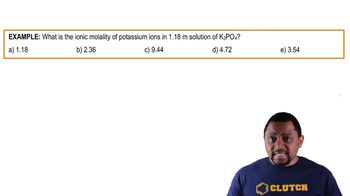
VideoThumbView.guidedCourse
01:05
The Colligative Properties Example 2
2910
views
7
rank
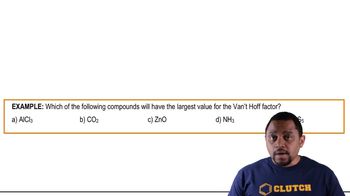
VideoThumbView.guidedCourse
01:04
The Colligative Properties Example 3
3338
views
7
rank
이 집합의 용어 (15)
하이드의 정의
What happens to the boiling point of a solvent when a solute is added?
The boiling point increases as more solute is added to the solvent.
How does the freezing point of a solvent change when solute is added?
The freezing point decreases as more solute is added to the solvent.
What is vapor pressure in the context of colligative properties?
Vapor pressure is the pressure exerted by a gas at the surface of a liquid at equilibrium.
What effect does adding solute have on the vapor pressure of a solvent?
Adding solute decreases the vapor pressure of the solvent.
What is osmotic pressure?
Osmotic pressure is the force that drives osmosis, moving water from low to high solute concentration.
How does osmotic pressure change as more solute is added to a solvent?
Osmotic pressure increases as more solute is added to the solvent.
What is the van't Hoff factor (I)?
The van't Hoff factor (I) is the number of ions produced when a soluble solute dissolves.
What is the van't Hoff factor for covalent compounds?
Covalent compounds do not dissociate into ions, so their van't Hoff factor (I) is always 1.
How many ions does sodium hydroxide produce when dissolved, and what is its van't Hoff factor?
Sodium hydroxide produces 2 ions (Na+ and OH−), so its van't Hoff factor (I) is 2.
What is the van't Hoff factor for ammonium carbonate?
Ammonium carbonate produces 3 ions (2 ammonium and 1 carbonate), so its van't Hoff factor (I) is 3.
How many ions does aluminum sulfate produce when dissolved, and what is its van't Hoff factor?
Aluminum sulfate produces 5 ions (2 aluminum and 3 sulfate), so its van't Hoff factor (I) is 5.
What types of compounds are non-volatile and non-electrolytes?
Covalent compounds are non-volatile and non-electrolytes, meaning they do not break up into ions.
How does the amount of solute added affect colligative properties?
More solute leads to higher boiling points and osmotic pressure, and lower freezing points and vapor pressures.
How is osmolarity calculated?
Osmolarity is calculated as the van't Hoff factor (I) times the molarity of the compound.
How is osmolality calculated?
Osmolality is calculated as the van't Hoff factor (I) times the molality of the compound.
 뒤로뒤로
뒤로뒤로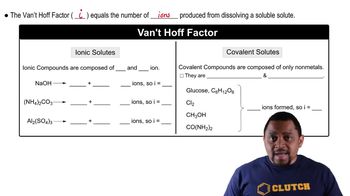
 02:51
02:51