Skip to main content
Macroeconomics
나의 코스
배우기
시험 준비
AI 튜터
학습 가이드
플래시카드
탐험해 보세요
앱을 사용해 보세요
나의 코스
배우기
시험 준비
AI 튜터
학습 가이드
플래시카드
탐험해 보세요
앱을 사용해 보세요
뒤로
Criticisms of Fiscal Policy definitions
카드를 뒤집기 위해 탭할 수 있습니다.
Fiscal Policy
카드를 뒤집기 위해 탭할 수 있습니다.
👆
Fiscal Policy
Government decisions on spending and taxation aimed at influencing overall economic activity and stabilizing the economy.
진행 상황 추적
컨트롤 버튼이 '내비게이션' 모드로 변경되었습니다.
1/15
관련 플래시카드
관련 실천
추천 영상
Criticisms of Fiscal Policy quiz
Criticisms of Fiscal Policy
15 용어
Criticisms of Fiscal Policy
19. Fiscal Policy
10 문제점
주제
Long Run Effects of Fiscal Policy
19. Fiscal Policy
10 문제점
주제
20. Fiscal Policy
6 주제
12 문제점
장
VideoThumbView.guidedCourse
02:19
Political Environment
1118
views
17
rank
VideoThumbView.guidedCourse
01:39
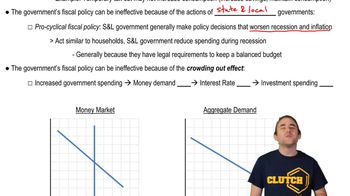
Pro-Cyclical Fiscal Policy
1113
views
14
rank
VideoThumbView.guidedCourse
04:16
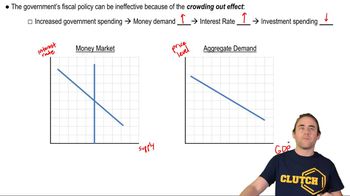
Crowding Out Effect
1347
views
25
rank
이 집합의 용어 (15)
하이드의 정의
Fiscal Policy
Government decisions on spending and taxation aimed at influencing overall economic activity and stabilizing the economy.
Time Lag
The delay between recognizing an economic issue and the actual impact of government policy on the economy.
Recognition Lag
The period required to identify the onset of a recession or economic downturn before policy action is taken.
Operational Lag
The interval between policy approval and the moment its effects are felt in the economy, often due to implementation delays.
Political Environment
The influence of political motives, such as reelection goals, on the design and timing of government economic actions.
Policy Reversal
The undoing or alteration of previously enacted government measures, often due to changes in political leadership.
Procyclical Fiscal Policy
Government actions that amplify economic fluctuations by increasing spending in booms and cutting it during recessions.
Balanced Budget Requirement
Legal constraints forcing governments to match expenditures with revenues, limiting deficit spending during downturns.
Crowding Out Effect
A situation where increased government borrowing raises interest rates, reducing private investment and long-term growth.
Government Spending
Expenditures by public authorities on goods, services, and projects, directly affecting aggregate demand.
Interest Rate
The cost of borrowing money, which rises when government demand for funds increases, impacting private sector investment.
Investment Spending
Expenditures by businesses on capital goods like factories and equipment, crucial for future economic productivity.
Aggregate Demand
The total demand for goods and services within an economy, influenced by consumption, investment, government outlays, and net exports.
Budget Deficit
A financial situation where government expenditures exceed revenues, often financed through borrowing.
Money Market
The arena where the supply and demand for money determine the equilibrium interest rate in the economy.
 뒤로뒤로
뒤로뒤로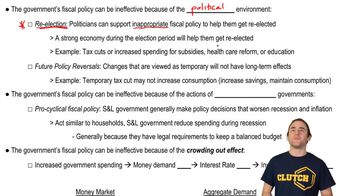
 02:19
02:19