Skip to main content
Macroeconomics
나의 코스
배우기
시험 준비
AI 튜터
학습 가이드
플래시카드
탐험해 보세요
앱을 사용해 보세요
나의 코스
배우기
시험 준비
AI 튜터
학습 가이드
플래시카드
탐험해 보세요
앱을 사용해 보세요
뒤로
Demand for Labor in Perfect Competition definitions
카드를 뒤집기 위해 탭할 수 있습니다.
Derived Demand
카드를 뒤집기 위해 탭할 수 있습니다.
👆
Derived Demand
Occurs when the need for a resource depends on the demand for the final good it helps produce.
진행 상황 추적
컨트롤 버튼이 '내비게이션' 모드로 변경되었습니다.
1/13
관련 플래시카드
추천 영상
Demand for Labor in Perfect Competition quiz
Demand for Labor in Perfect Competition
15 용어
VideoThumbView.guidedCourse
04:33
Demand for Labor in Perfect Competition
8
views
이 집합의 용어 (13)
하이드의 정의
Derived Demand
Occurs when the need for a resource depends on the demand for the final good it helps produce.
Labor Market
A setting where firms seek workers and individuals offer their work, determining employment and wage outcomes.
Equilibrium Wage
The pay rate where the number of workers firms want equals the number of workers willing to work.
Wage
The monetary compensation paid to workers, acting as the price for their labor in the market.
Labor Supply
The total amount of work effort individuals are willing to offer at various wage levels.
Labor Demand
The quantity of workers firms wish to hire at different wage rates, shaped by productivity and product demand.
Marginal Revenue Product
The extra income a firm gains from hiring one more worker, guiding how many workers to employ.
Production Function
A relationship showing how inputs like labor are transformed into outputs by a firm.
Equilibrium Quantity
The number of workers employed where labor supply meets labor demand in the market.
Price of Labor
The cost to firms for employing workers, typically reflected as the wage rate.
Product Market
A marketplace where final goods are bought and sold, influencing the need for labor.
Quantity of Workers
The total number of employees hired by firms at a given wage.
Value of Marginal Product
Another term for the additional revenue generated by employing one more unit of labor.
 뒤로뒤로
뒤로뒤로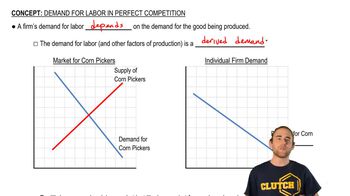
 04:33
04:33