Skip to main content
Macroeconomics
나의 코스
배우기
시험 준비
AI 튜터
학습 가이드
플래시카드
탐험해 보세요
앱을 사용해 보세요
나의 코스
배우기
시험 준비
AI 튜터
학습 가이드
플래시카드
탐험해 보세요
앱을 사용해 보세요
뒤로
Expansionary and Contractionary Fiscal Policy definitions
카드를 뒤집기 위해 탭할 수 있습니다.
Fiscal Policy
카드를 뒤집기 위해 탭할 수 있습니다.
👆
Fiscal Policy
Government strategy involving changes in spending or taxation to influence aggregate demand and overall economic activity.
진행 상황 추적
컨트롤 버튼이 '내비게이션' 모드로 변경되었습니다.
1/15
관련 플래시카드
관련 실천
추천 영상
Expansionary and Contractionary Fiscal Policy quiz #1
Expansionary and Contractionary Fiscal Policy
14 용어
Expansionary and Contractionary Fiscal Policy
19. Fiscal Policy
10 문제점
주제
Government Purchases and the Multiplier Effect
19. Fiscal Policy
10 문제점
주제
20. Fiscal Policy
6 주제
12 문제점
장
VideoThumbView.guidedCourse
03:48
Contractionary Fiscal Policy
1724
views
46
rank
VideoThumbView.guidedCourse
05:24
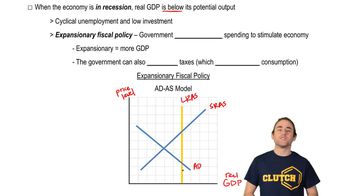
Expansionary Fiscal Policy
2077
views
43
rank
이 집합의 용어 (15)
하이드의 정의
Fiscal Policy
Government strategy involving changes in spending or taxation to influence aggregate demand and overall economic activity.
Aggregate Demand
Total demand for goods and services in an economy, including consumption, investment, government purchases, and net exports.
Expansionary Fiscal Policy
Government action of increasing spending or reducing taxes to stimulate economic growth during a recession.
Contractionary Fiscal Policy
Government approach of decreasing spending or raising taxes to slow economic activity and control inflation.
Recession
Economic period marked by real GDP falling below potential output, often accompanied by cyclical unemployment.
Inflation
General rise in price levels, often occurring when aggregate demand exceeds the economy's long-run potential.
Long-Run Aggregate Supply
Level of output an economy can produce when all resources are fully employed, representing potential GDP.
Short-Run Aggregate Supply
Total production of goods and services in the economy at current prices, before full adjustment to equilibrium.
Potential GDP
Maximum sustainable output an economy can achieve without causing inflationary pressures.
Government Spending
Expenditures by the public sector on goods and services, directly influencing aggregate demand.
Taxes
Compulsory payments to the government, affecting disposable income and consumption levels.
Disposable Income
Household income available for spending and saving after taxes have been deducted.
Consumption
Spending by households on goods and services, a major component of aggregate demand.
Overemployment
Situation where more people are working than is sustainable, often due to excessive economic activity and high wages.
Price Level
Average of current prices across the entire spectrum of goods and services produced in the economy.
 뒤로뒤로
뒤로뒤로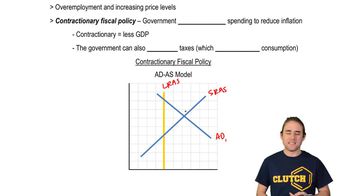
 03:48
03:48