Skip to main content
Macroeconomics
나의 코스
배우기
시험 준비
AI 튜터
학습 가이드
플래시카드
탐험해 보세요
앱을 사용해 보세요
나의 코스
배우기
시험 준비
AI 튜터
학습 가이드
플래시카드
탐험해 보세요
앱을 사용해 보세요
뒤로
Long Run Entry and Exit Decision definitions
카드를 뒤집기 위해 탭할 수 있습니다.
Average Total Cost
카드를 뒤집기 위해 탭할 수 있습니다.
👆
Average Total Cost
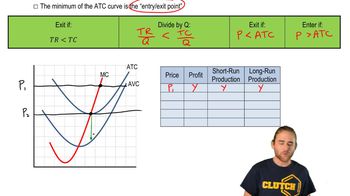
Represents all costs per unit of output, including both fixed and variable, crucial for long run entry and exit decisions.
진행 상황 추적
컨트롤 버튼이 '내비게이션' 모드로 변경되었습니다.
1/15
관련 플래시카드
추천 영상
Long Run Entry and Exit Decision quiz
Long Run Entry and Exit Decision
15 용어
VideoThumbView.guidedCourse
06:04
Long Run Exit/Enter Decision (continued)
5
views
VideoThumbView.guidedCourse
09:32
Long Run Exit/Enter Decision on the Graph
5
views
VideoThumbView.guidedCourse
02:39
Long Run Exit/Enter Decision
5
views
이 집합의 용어 (15)
하이드의 정의
Average Total Cost
Represents all costs per unit of output, including both fixed and variable, crucial for long run entry and exit decisions.
Variable Cost
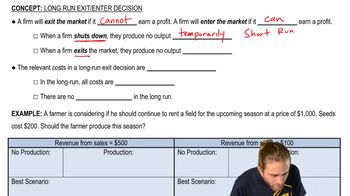
Expenses that change with output level, such as seeds or labor, and are the only relevant costs in the long run.
Fixed Cost
Obligations like leases that cannot be changed in the short run but become avoidable in the long run.
Economic Profit
Surplus after accounting for both explicit and opportunity costs, determining true profitability for firms.
Accounting Profit
Earnings calculated without considering opportunity costs, typically higher than economic profit.
Opportunity Cost
Value of the next best alternative forgone, such as a salary not earned when choosing to operate a business.
Marginal Cost
Increase in total cost from producing one more unit, used to determine optimal output.
Marginal Revenue
Additional income from selling one more unit, equal to price in perfect competition.
Average Variable Cost
Variable expenses per unit of output, relevant for short run shutdown but not for long run exit.
Entry Condition
Situation where market price exceeds average total cost, signaling profitability and attracting new firms.
Exit Condition
Scenario where market price falls below average total cost, prompting firms to leave the market.
Perfect Competition
Market structure with many firms, identical products, and price-taking behavior, leading to zero economic profit in the long run.
Aggregate Supply
Total quantity of goods firms are willing to sell at various prices, influenced by entry and exit.
Market Equilibrium
Point where aggregate supply equals aggregate demand, with no incentive for firms to enter or exit.
Profit Maximization
Goal of producing at the output level where marginal revenue equals marginal cost, ensuring highest possible earnings.
 뒤로뒤로
뒤로뒤로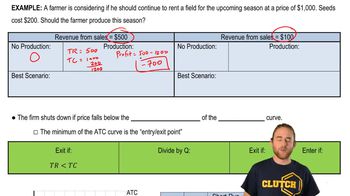
 06:04
06:04