Skip to main content
Macroeconomics
나의 코스
배우기
시험 준비
AI 튜터
학습 가이드
플래시카드
탐험해 보세요
앱을 사용해 보세요
나의 코스
배우기
시험 준비
AI 튜터
학습 가이드
플래시카드
탐험해 보세요
앱을 사용해 보세요
뒤로
Stocks, Bonds, and Mutual Funds quiz
카드를 뒤집기 위해 탭할 수 있습니다.
What does a bond represent in financial investments?
카드를 뒤집기 위해 탭할 수 있습니다.
👆
What does a bond represent in financial investments?
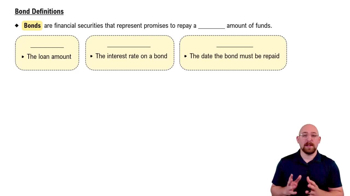
A bond represents a promise to repay a fixed amount of funds, including the principal and interest, at a specified maturity date.
진행 상황 추적
컨트롤 버튼이 '내비게이션' 모드로 변경되었습니다.
1/15
관련 플래시카드
관련 실천
추천 영상
Stocks, Bonds, and Mutual Funds definitions
Stocks, Bonds, and Mutual Funds
15 용어
Stocks, Bonds, and Mutual Funds
13. The Financial System
10 문제점
주제
Risk and Insurance
13. The Financial System
10 문제점
주제
14. The Financial System - Part 1 of 2
8 주제
15 문제점
장
13. The Financial System - Part 2 of 2
1 주제
3 문제점
장
VideoThumbView.guidedCourse
02:47
Mutual Fund Definitions
1433
views
20
rank
VideoThumbView.guidedCourse
02:11
Bond Definitions
245
views
7
rank
VideoThumbView.guidedCourse
02:52
Stock Definitions
1486
views
11
rank
이 집합의 용어 (15)
하이드의 정의
What does a bond represent in financial investments?
A bond represents a promise to repay a fixed amount of funds, including the principal and interest, at a specified maturity date.
What is the principal amount in a bond?
The principal amount is the original sum of money invested or loaned through the bond, which will be repaid at maturity.
What is the coupon rate on a bond?
The coupon rate is the interest rate paid by the bond issuer to the bondholder, representing the bond's annual return.
What is the maturity date of a bond?
The maturity date is the specific date when the bond issuer must repay the principal amount to the bondholder.
Why are bonds considered relatively low-risk investments?
Bonds are considered low-risk because their returns and repayment terms are fixed and bondholders are paid before shareholders in bankruptcy.
What does owning stock in a company represent?
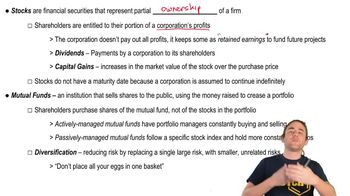
Owning stock means having partial ownership in a company and being entitled to a share of its profits.
What are the two main ways investors earn money from stocks?
Investors earn money from stocks through dividends (profit payments) and capital gains (increases in stock value).
What are retained earnings in a corporation?
Retained earnings are profits that a company keeps to fund future projects instead of distributing them as dividends.
Do stocks have a maturity date like bonds?
No, stocks do not have a maturity date; they are held as long-term investments as long as the company exists.
What is a mutual fund?
A mutual fund is an investment vehicle that pools money from many investors to buy a diversified portfolio of stocks, bonds, or other securities.
When you buy shares of a mutual fund, do you directly own the companies in the fund?
No, you own shares of the mutual fund itself, not direct shares in the companies or securities the fund holds.
What is the main advantage of investing in mutual funds?
The main advantage is diversification, which reduces risk by spreading investments across many assets.
What is the difference between actively managed and passively managed mutual funds?
Actively managed funds have managers who frequently buy and sell securities, while passively managed funds follow a specific index with less trading.
How does diversification reduce investment risk?
Diversification reduces risk by spreading investments across many unrelated assets, so losses in one do not heavily impact the overall portfolio.
In the event of bankruptcy, who gets paid first: bondholders or stockholders?
Bondholders are paid before stockholders if a company goes bankrupt.
 뒤로뒤로
뒤로뒤로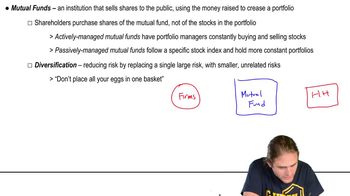
 02:47
02:47