Skip to main content
Macroeconomics
나의 코스
배우기
시험 준비
AI 튜터
학습 가이드
플래시카드
탐험해 보세요
앱을 사용해 보세요
나의 코스
배우기
시험 준비
AI 튜터
학습 가이드
플래시카드
탐험해 보세요
앱을 사용해 보세요
뒤로
Types of Unemployment definitions
카드를 뒤집기 위해 탭할 수 있습니다.
Frictional Unemployment
카드를 뒤집기 위해 탭할 수 있습니다.
👆
Frictional Unemployment
Short-term joblessness from workers transitioning between positions, often involving individuals with marketable skills seeking better job matches.
진행 상황 추적
컨트롤 버튼이 '내비게이션' 모드로 변경되었습니다.
1/14
관련 플래시카드
관련 실천
추천 영상
Types of Unemployment quiz #1
Types of Unemployment
20 용어
Types of Unemployment
11. Unemployment and Inflation
10 문제점
주제
Unemployment: Minimum Wage Laws and Efficiency Wages
11. Unemployment and Inflation
10 문제점
주제
12. Unemployment and Inflation
8 주제
11 문제점
장
VideoThumbView.guidedCourse
05:44
Frictional, Structural, and Cyclical Unemployment
3357
views
64
rank
VideoThumbView.guidedCourse
02:44
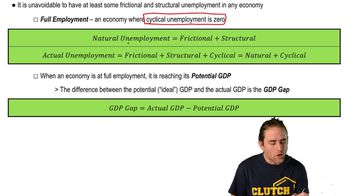
Definition of Full Employment
2696
views
48
rank
이 집합의 용어 (14)
하이드의 정의
Frictional Unemployment
Short-term joblessness from workers transitioning between positions, often involving individuals with marketable skills seeking better job matches.
Structural Unemployment
Long-term joblessness caused by a mismatch between worker skills and available jobs, often due to technological or economic shifts.
Cyclical Unemployment
Joblessness resulting from downturns in the business cycle, especially during recessions when demand for goods and services falls.
Business Cycle
Recurring pattern of economic expansion and contraction, influencing employment levels, especially cyclical unemployment.
Full Employment
Economic condition where only frictional and structural unemployment exist, with no joblessness caused by economic downturns.
Natural Unemployment
Sum of frictional and structural unemployment, representing the baseline level of joblessness in a healthy economy.
Actual Unemployment Rate
Percentage reflecting all types of unemployment—frictional, structural, and cyclical—present in the economy.
Potential GDP
Maximum output an economy can achieve when operating at full employment, utilizing its workforce efficiently.
GDP Gap
Difference between actual economic output and the potential output achievable at full employment.
Job Match
Alignment between a worker’s skills and the requirements of a position, leading to higher productivity and satisfaction.
Marketable Skills
Abilities or expertise that are in demand and allow workers to find suitable employment opportunities.
Recession
Period of economic decline marked by reduced production and increased unemployment, often causing cyclical job losses.
Human Capital
Accumulated skills, knowledge, and experience possessed by workers, influencing their employability.
Seasonal Unemployment
Temporary joblessness occurring when employment ends due to predictable seasonal patterns, included within frictional unemployment.
 뒤로뒤로
뒤로뒤로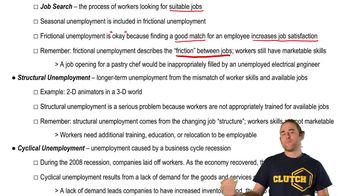
 05:44
05:44