Skip to main content
Macroeconomics
나의 코스
배우기
시험 준비
AI 튜터
학습 가이드
플래시카드
탐험해 보세요
앱을 사용해 보세요
나의 코스
배우기
시험 준비
AI 튜터
학습 가이드
플래시카드
탐험해 보세요
앱을 사용해 보세요
뒤로
Unions definitions
카드를 뒤집기 위해 탭할 수 있습니다.
Labor Union
카드를 뒤집기 위해 탭할 수 있습니다.
👆
Labor Union
An organized group of workers negotiating collectively for improved wages and working conditions, often by leveraging group strength.
진행 상황 추적
컨트롤 버튼이 '내비게이션' 모드로 변경되었습니다.
1/14
관련 플래시카드
추천 영상
Unions quiz
Unions
15 용어
VideoThumbView.guidedCourse
06:50
Labor Unions
4
views
이 집합의 용어 (14)
하이드의 정의
Labor Union
An organized group of workers negotiating collectively for improved wages and working conditions, often by leveraging group strength.
Collective Bargaining
A negotiation process where workers act as a unified group to secure better pay and workplace standards from employers.
Labor Supply
The total number of workers willing and able to work at various wage levels in a given market.
Labor Demand
The quantity of workers that firms are willing to hire at different wage rates, influenced by productivity and wage costs.
Equilibrium Wage
The pay rate where the number of workers firms want to hire equals the number of workers willing to work.
Equilibrium Quantity
The number of jobs where labor supply matches labor demand, determining employment levels in the market.
Apprenticeship Program
A structured training system requiring technical education and certification before joining certain skilled professions.
Job Qualification Standards
Criteria set by organizations or unions that workers must meet to be eligible for specific employment positions.
Marginal Product of Labor
The additional output produced by employing one more worker, often increased through specialized training.
Minimum Wage Law
A regulation setting the lowest legal hourly pay, often supported by unions to boost earnings for workers.
Union Membership
The proportion of workers belonging to organized labor groups, varying widely across countries and over time.
Industrial Revolution
A historical period marked by rapid industrial growth, leading to poor working conditions and the rise of organized labor.
Productivity Improvement
An increase in output per worker, often resulting from enhanced skills or training programs promoted by unions.
Employment Dynamics
The patterns and changes in job availability, wages, and workforce composition within the labor market.
 뒤로뒤로
뒤로뒤로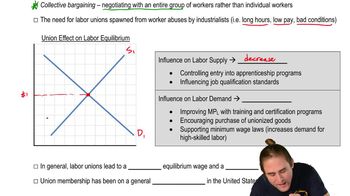
 06:50
06:50