Starch is readily metabolized by many cells, but a starch molecule is too large to cross the plasma membrane. How does a cell obtain the glucose molecules from a starch polymer? How does the cell transport these glucose molecules across the plasma membrane?
검증된 단계별 안내
1
Understand that starch is a polysaccharide composed of many glucose units linked together, making it too large to pass through the plasma membrane directly.
Recognize that cells secrete enzymes called amylases which break down starch into smaller sugar units such as maltose and glucose outside the cell.
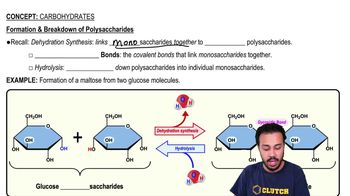
Identify that the enzymatic hydrolysis of starch involves breaking the glycosidic bonds, converting the polymer into smaller, transportable molecules like glucose.
Learn that once starch is broken down into glucose molecules, these smaller sugars can be transported across the plasma membrane using specific transport proteins such as glucose transporters.
Note that glucose transport across the membrane can occur via facilitated diffusion or active transport, depending on the cell type and environmental conditions.
비슷한 문제에 대한 검증된 영상 답변:
이 영상 해법은 위 문제에 도움이 된다고 튜터들이 추천한 것입니다.
영상 길이:
3m
영상 재생:
0 댓글
주요 개념
질문에 올바르게 답하기 위해 반드시 이해해야 하는 핵심 개념들은 다음과 같습니다.
Extracellular Enzymatic Breakdown of Starch
Cells secrete enzymes called amylases that break down large starch polymers into smaller glucose units outside the cell. This extracellular digestion is necessary because starch molecules are too large to pass through the plasma membrane directly.
Once starch is broken down into glucose, cells transport glucose molecules across the plasma membrane using specific transport proteins, such as facilitated diffusion carriers or active transporters, depending on the cell type and glucose concentration.
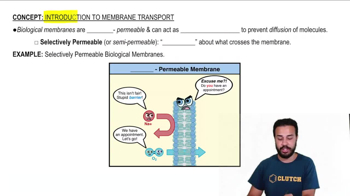
The plasma membrane is selectively permeable, allowing only certain molecules to pass through. Large molecules like starch cannot cross, so cells rely on enzymatic breakdown and transport proteins to import smaller, usable nutrients like glucose.

 3:00분
3:00분 검증된 단계별 안내
 03:08
03:08