Use the following choices to answer the question: a. Catabolite repression b. DNA polymerase c. Induction d. Repression e. Translation
Mechanism by which the presence of glucose inhibits the lac operon.
검증된 단계별 안내
1
Identify the key concept in the question: it asks for the mechanism by which glucose presence inhibits the lac operon.
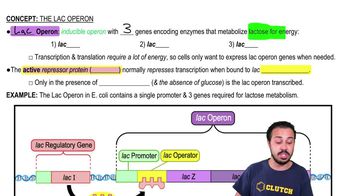
Recall that the lac operon is a set of genes involved in lactose metabolism, and its expression is regulated depending on the availability of glucose and lactose.
Understand that when glucose is present, the cell prefers to use it over lactose, so it suppresses the lac operon to conserve energy.
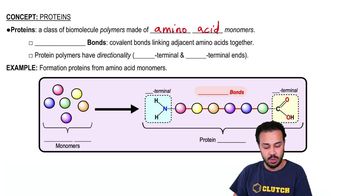
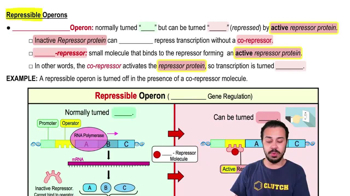
Recognize that this suppression mechanism is called catabolite repression, where glucose presence leads to decreased levels of cyclic AMP (cAMP), reducing activation of the lac operon.
Match the correct term from the given choices to this mechanism, which is 'catabolite repression'.
비슷한 문제에 대한 검증된 영상 답변:
이 영상 해법은 위 문제에 도움이 된다고 튜터들이 추천한 것입니다.
영상 길이:
4m
영상 재생:
0 댓글
주요 개념
질문에 올바르게 답하기 위해 반드시 이해해야 하는 핵심 개념들은 다음과 같습니다.
Catabolite Repression
Catabolite repression is a regulatory mechanism in bacteria where the presence of a preferred carbon source, like glucose, inhibits the expression of genes involved in the metabolism of alternative sugars. In the lac operon, glucose lowers cAMP levels, preventing activation of the CAP protein, thus repressing lac operon transcription.
The lac operon controls the metabolism of lactose in E. coli and is regulated by both induction and repression mechanisms. When glucose is absent and lactose is present, the operon is induced to produce enzymes for lactose utilization; glucose presence inhibits this process through catabolite repression.
Cyclic AMP (cAMP) binds to the catabolite activator protein (CAP) to form a complex that enhances RNA polymerase binding to the lac operon promoter. Glucose reduces intracellular cAMP levels, preventing CAP binding and thus inhibiting transcription of the lac operon.

 4:31분
4:31분 검증된 단계별 안내
 03:42
03:42