Which direct enumeration method differentiates living from nonliving cells? a. Manual cell counts b. Measuring dry weight of cells c. Viable plate count d. Measuring biochemical activity e. Coulter counter
검증된 단계별 안내
1
Understand that direct enumeration methods involve counting cells directly, either visually or instrumentally, rather than estimating based on indirect measures.
Recognize that some methods count all cells present, regardless of whether they are alive or dead, while others specifically count only living cells.
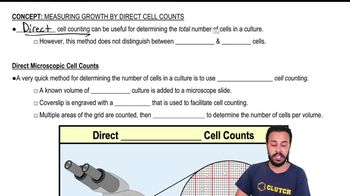
Manual cell counts (option a) and Coulter counters (option e) count all cells, living or dead, because they rely on visual or electronic detection without assessing viability.
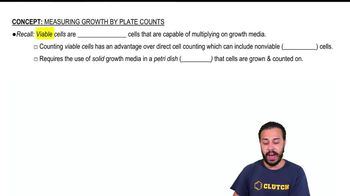
Viable plate count (option c) involves spreading a diluted sample on a nutrient agar plate and counting the number of colonies that grow, which represent living cells capable of reproduction.
Therefore, the method that differentiates living from nonliving cells is the viable plate count, as it only counts cells that can form colonies.
비슷한 문제에 대한 검증된 영상 답변:
이 영상 해법은 위 문제에 도움이 된다고 튜터들이 추천한 것입니다.
영상 길이:
2m
영상 재생:
0 댓글
주요 개념
질문에 올바르게 답하기 위해 반드시 이해해야 하는 핵심 개념들은 다음과 같습니다.
Direct Enumeration Methods
Direct enumeration methods involve counting cells individually, either manually or with instruments. These methods provide a total cell count but may not distinguish between living and dead cells unless combined with viability indicators.
Viable plate count measures only living cells by culturing them on nutrient media. Each colony arises from a single viable cell, allowing quantification of living microorganisms, unlike total counts that include dead cells.
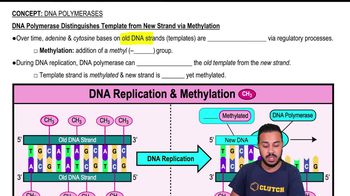
Differentiating living from nonliving cells requires methods that assess metabolic activity or the ability to reproduce. Techniques like viable plate counts or staining methods target only living cells, unlike physical counts or biomass measurements.

 2:04분
2:04분 검증된 단계별 안내
 03:28
03:28