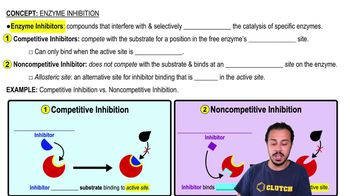
Using the following diagrams, show each of the following: a. where the substrate will bind b. where the competitive inhibitor will bind c. where the noncompetitive inhibitor will bind d. which of the four elements could be the inhibitor in feedback inhibition e. What effect will the reactions in (a), (b), and (c) have?
검증된 단계별 안내
1
Step 1: Identify the substrate binding site on the enzyme diagram. This is typically the active site where the substrate fits specifically, often shown as a complementary shape or pocket on the enzyme surface.
Step 2: Locate the competitive inhibitor binding site. Competitive inhibitors bind directly to the active site, competing with the substrate for the same spot, so mark the active site again but indicate the inhibitor binding there instead of the substrate.
Step 3: Identify the noncompetitive inhibitor binding site. Noncompetitive inhibitors bind to a different site on the enzyme, called the allosteric site, which is separate from the active site. Mark this distinct site on the enzyme where the noncompetitive inhibitor attaches.
Step 4: Determine which of the four elements in the diagram could act as the inhibitor in feedback inhibition. Feedback inhibition usually involves the end product of a metabolic pathway binding to an allosteric site on an earlier enzyme to regulate the pathway. Identify the element that fits this description and mark it as the feedback inhibitor.
Step 5: Explain the effects of the reactions in (a), (b), and (c): (a) substrate binding leads to enzyme catalysis and product formation; (b) competitive inhibitor binding blocks substrate access to the active site, reducing enzyme activity; (c) noncompetitive inhibitor binding changes enzyme shape, decreasing its activity regardless of substrate presence.
비슷한 문제에 대한 검증된 영상 답변:
이 영상 해법은 위 문제에 도움이 된다고 튜터들이 추천한 것입니다.
영상 길이:
3m
영상 재생:
0 댓글
주요 개념
질문에 올바르게 답하기 위해 반드시 이해해야 하는 핵심 개념들은 다음과 같습니다.
Enzyme-Substrate Binding
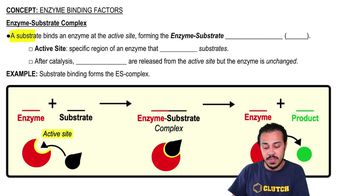
Enzymes have specific active sites where substrates bind to form an enzyme-substrate complex, facilitating the chemical reaction. This binding is highly specific, often described by the 'lock and key' or 'induced fit' models, ensuring that only the correct substrate fits into the active site.
Competitive inhibitors bind to the enzyme's active site, directly blocking substrate binding, while noncompetitive inhibitors bind to an allosteric site, changing the enzyme's shape and reducing its activity. Both types decrease enzyme efficiency but through different mechanisms.
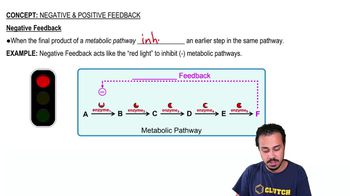
Feedback inhibition occurs when the end product of a metabolic pathway acts as an inhibitor, usually noncompetitive, to an earlier enzyme, regulating the pathway's activity. This prevents overproduction of the product and maintains cellular homeostasis.

 3:58분
3:58분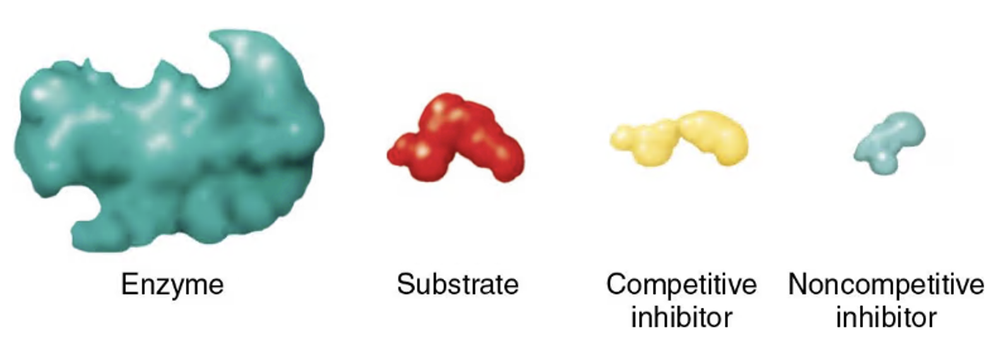
 검증된 단계별 안내
 03:49
03:49