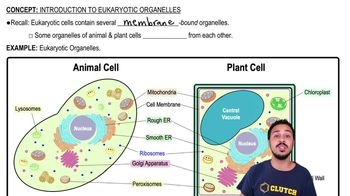
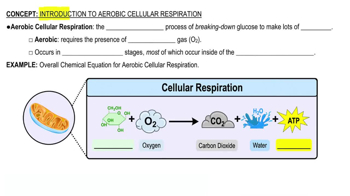
Match the characteristics of eukaryotic cells in column A with their functions in column B.
검증된 단계별 안내
1
Identify each characteristic of eukaryotic cells listed in column A. These might include features such as the presence of a nucleus, membrane-bound organelles, cytoskeleton, and others.
Review the functions listed in column B carefully. These functions describe the roles or activities associated with cellular structures or processes.
For each characteristic in column A, recall its biological role or function within the eukaryotic cell. For example, the nucleus contains genetic material and controls cell activities.
Match each characteristic to the function that best describes its role. Use your knowledge of cell biology to connect structures to their specific functions.
Double-check your matches to ensure that each characteristic is paired with the most accurate and relevant function, considering the unique features of eukaryotic cells.
비슷한 문제에 대한 검증된 영상 답변:
이 영상 해법은 위 문제에 도움이 된다고 튜터들이 추천한 것입니다.
영상 길이:
2m
영상 재생:
0 댓글
주요 개념
질문에 올바르게 답하기 위해 반드시 이해해야 하는 핵심 개념들은 다음과 같습니다.
Eukaryotic Cell Structure
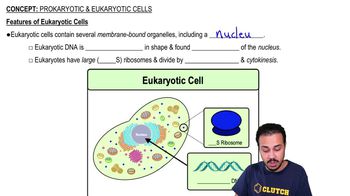
Eukaryotic cells have complex structures with membrane-bound organelles such as the nucleus, mitochondria, and endoplasmic reticulum. Understanding these components is essential to link their physical characteristics to specific cellular functions.
Each organelle in a eukaryotic cell performs distinct functions, such as energy production by mitochondria or protein synthesis by ribosomes. Recognizing these roles helps in matching cell parts to their biological activities.
Eukaryotic cells compartmentalize processes within organelles, allowing specialized environments for different biochemical reactions. This concept explains why certain structures have unique functions critical for cell survival and efficiency.

 2:20분
2:20분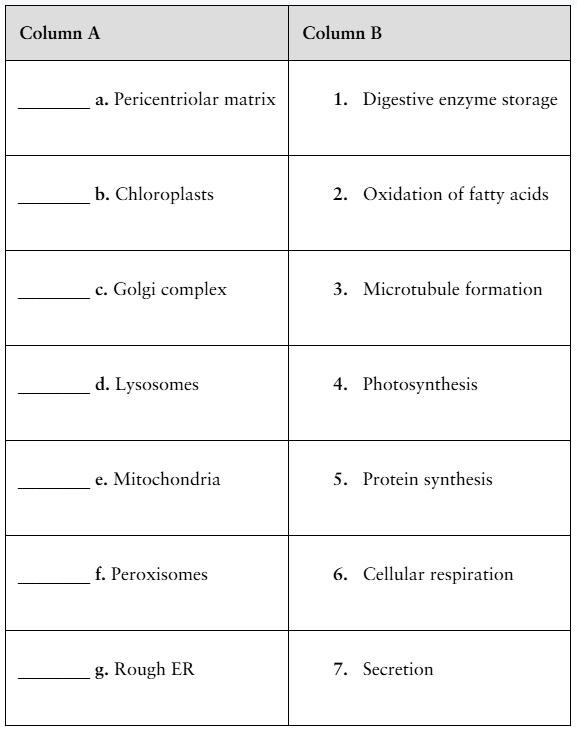
 검증된 단계별 안내
 04:17
04:17