Skip to main content
Microbiology
나의 코스
배우기
시험 준비
AI 튜터
학습 가이드
교과서적 해결책
플래시카드
탐험해 보세요
앱을 사용해 보세요
나의 코스
배우기
시험 준비
AI 튜터
학습 가이드
교과서적 해결책
플래시카드
탐험해 보세요
앱을 사용해 보세요
뒤로
Antigens quiz #1
카드를 뒤집기 위해 탭할 수 있습니다.
What specific region on an antigen do antibodies bind to?
카드를 뒤집기 위해 탭할 수 있습니다.
👆
What specific region on an antigen do antibodies bind to?
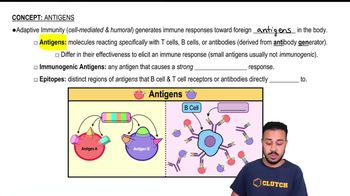
Antibodies specifically bind to epitopes, which are distinct regions on the antigen.
진행 상황 추적
컨트롤 버튼이 '내비게이션' 모드로 변경되었습니다.
1/10
관련 플래시카드
관련 실천
추천 영상
Antigens definitions
Antigens
15 용어
Antigens
20. Adaptive Immunity
4 문제점
주제
Nicole
Introduction to T Lymphocytes
20. Adaptive Immunity
2 문제점
주제
Nicole
20. Adaptive Immunity - Part 1 of 3
7 주제
12 문제점
장
Brendan
20. Adaptive Immunity - Part 2 of 3
6 주제
13 문제점
장
Brendan
20. Adaptive Immunity - Part 3 of 3
7 주제
13 문제점
장
Brendan
04:11
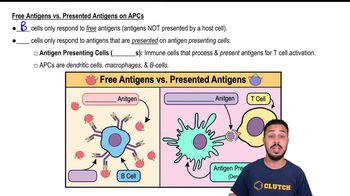
Free Antigens vs. Presented Antigens on APCs
1627
views
15
rank
03:59
Antigens
1838
views
23
rank
이 집합의 용어 (10)
하이드의 정의
What specific region on an antigen do antibodies bind to?
Antibodies specifically bind to epitopes, which are distinct regions on the antigen.
What is an antigen in the context of immunology?
An antigen is any molecule that specifically reacts with T cells, B cells, or antibodies.
Antigens are usually ______.
Antigens are usually molecules.
What is any substance capable of provoking an immune response called?
Any substance capable of provoking an immune response is called an antigen.
What does the term 'antigen' stand for and how is it derived?
The term 'antigen' stands for 'antibody generator' and is derived from its ability to generate antibodies in the immune system.
Why are small antigens typically not immunogenic?
Small antigens are usually not immunogenic because they do not elicit a strong immune response from the immune system.
What is the role of antigen presenting cells (APCs) in T cell activation?
APCs process and present antigens on their surface, which is necessary for the activation of T cells to initiate an immune response.
Name three types of cells that can act as antigen presenting cells (APCs).
Dendritic cells, macrophages, and B cells can all serve as antigen presenting cells (APCs).
How do B cells and T cells differ in their response to antigens?
B cells respond only to free-floating antigens, while T cells respond only to antigens that are presented by APCs.
What happens when a free antigen binds to a B cell receptor (BCR)?
Binding of a free antigen to a B cell receptor can lead to the activation of the B cell, enabling it to perform its immune functions.
 뒤로뒤로
뒤로뒤로
 04:11
04:11