Skip to main content
Microbiology
나의 코스
배우기
시험 준비
AI 튜터
학습 가이드
교과서적 해결책
플래시카드
탐험해 보세요
앱을 사용해 보세요
나의 코스
배우기
시험 준비
AI 튜터
학습 가이드
교과서적 해결책
플래시카드
탐험해 보세요
앱을 사용해 보세요
뒤로
Carbon definitions
카드를 뒤집기 위해 탭할 수 있습니다.
Carbon
카드를 뒤집기 위해 탭할 수 있습니다.
👆
Carbon
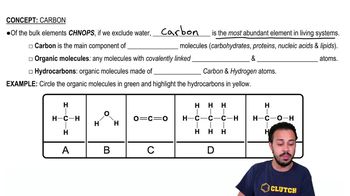
Most abundant element in living systems (excluding water); forms the backbone of organic molecules due to its bonding versatility.
진행 상황 추적
컨트롤 버튼이 '내비게이션' 모드로 변경되었습니다.
1/14
관련 플래시카드
관련 실천
추천 영상
Carbon quiz
Carbon
15 용어
Carbon
5. Molecules of Microbiology
5 문제점
주제
Nicole
Functional Groups
5. Molecules of Microbiology
3 문제점
주제
Brendan
5. Molecules of Microbiology
8 주제
14 문제점
장
Nicole
03:35
Carbon is an Excellent Building Block
21953
views
864
rank
04:19
Carbon
28965
views
680
rank
이 집합의 용어 (14)
하이드의 정의
Carbon
Most abundant element in living systems (excluding water); forms the backbone of organic molecules due to its bonding versatility.
Organic Molecule
Compound containing covalently linked carbon and hydrogen atoms, forming the basis of life's molecular diversity.
Hydrocarbon
Subset of organic compounds made exclusively of carbon and hydrogen atoms, lacking other elements.
Covalent Bond
Strong chemical connection where atoms share electron pairs, enabling stable molecular structures.
Carbohydrate
Class of organic molecules built from carbon, hydrogen, and oxygen; serves as energy source and structural component.
Protein
Organic macromolecule composed of amino acids; essential for structure, function, and regulation in living organisms.
Nucleic Acid
Macromolecule storing and transmitting genetic information; includes DNA and RNA.
Lipid
Diverse group of hydrophobic organic molecules, important for energy storage and membrane structure.
Carbon Backbone
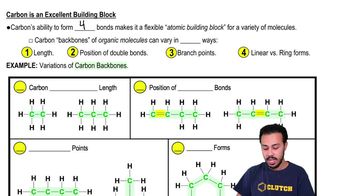
Linear, branched, or ring-shaped chain of carbon atoms forming the structural framework of organic molecules.
Double Bond
Type of covalent linkage where two pairs of electrons are shared between atoms, affecting molecule shape and reactivity.
Branch Point
Location in a carbon chain where a side chain diverges from the main backbone, increasing molecular complexity.
Ring Structure
Cyclic arrangement of carbon atoms in a molecule, contributing to chemical stability and diversity.
Methane
Simplest hydrocarbon, consisting of one carbon atom bonded to four hydrogens; foundational example in organic chemistry.
CHNOPS
Acronym for the six most common elements in living organisms: carbon, hydrogen, nitrogen, oxygen, phosphorus, sulfur.
 뒤로뒤로
뒤로뒤로
 03:35
03:35