Skip to main content
Microbiology
나의 코스
배우기
시험 준비
AI 튜터
학습 가이드
교과서적 해결책
플래시카드
탐험해 보세요
앱을 사용해 보세요
나의 코스
배우기
시험 준비
AI 튜터
학습 가이드
교과서적 해결책
플래시카드
탐험해 보세요
앱을 사용해 보세요
뒤로
Chemical Reactions definitions
카드를 뒤집기 위해 탭할 수 있습니다.
Chemical Reaction
카드를 뒤집기 위해 탭할 수 있습니다.
👆
Chemical Reaction
Process involving the making or breaking of chemical bonds, transforming starting materials into new substances.
진행 상황 추적
컨트롤 버튼이 '내비게이션' 모드로 변경되었습니다.
1/14
관련 플래시카드
관련 실천
추천 영상
Chemical Reactions quiz
Chemical Reactions
15 용어
Chemical Reactions
12. Microbial Metabolism
4 문제점
주제
Brendan
ATP
12. Microbial Metabolism
4 문제점
주제
Brendan
12. Microbial Metabolism - Part 1 of 3
9 주제
14 문제점
장
Nicole
12. Microbial Metabolism - Part 2 of 3
6 주제
13 문제점
장
Nicole
12. Microbial Metabolism - Part 3 of 3
8 주제
13 문제점
장
Monica
01:56
Chemical Reactions
21886
views
370
rank
05:48
Types of Chemical Reactions
20129
views
287
rank
이 집합의 용어 (14)
하이드의 정의
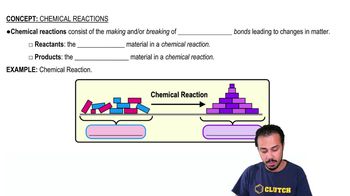
Chemical Reaction
Process involving the making or breaking of chemical bonds, transforming starting materials into new substances.
Reactant
Starting material or ingredient present at the beginning of a chemical process, found before the reaction arrow.
Product
Substance formed as a result of a chemical process, present at the end of the reaction arrow.
Chemical Bond
Connection between atoms that can be made or broken during chemical transformations, altering matter.
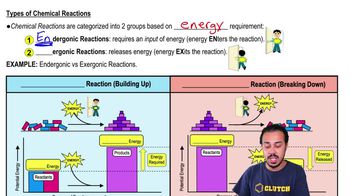
Endergonic Reaction
Type of process requiring energy input, resulting in products with higher potential energy than the starting materials.
Exergonic Reaction
Type of process that releases energy, producing substances with lower potential energy than the initial materials.
Potential Energy
Stored energy within molecules, which can increase or decrease during chemical transformations.
Energy Requirement
Amount and direction of energy flow needed for a chemical process to proceed, distinguishing reaction types.
Building Block
Basic molecular unit that can be assembled into larger structures or broken into smaller pieces during reactions.
Complex Molecule
Larger, more organized structure formed from smaller units, often as a result of energy input.
Breakdown
Process where larger molecules are separated into smaller components, often releasing energy.
Synthesis
Assembly of smaller units into a larger, more complex structure, typically requiring energy input.
Energy Release
Transfer of energy from a system to its environment, commonly observed in exergonic processes.
Energy Input
Addition of energy into a system, necessary for building larger molecules in certain reactions.
 뒤로뒤로
뒤로뒤로
 01:56
01:56