Skip to main content
Microbiology
나의 코스
배우기
시험 준비
AI 튜터
학습 가이드
교과서적 해결책
플래시카드
탐험해 보세요
앱을 사용해 보세요
나의 코스
배우기
시험 준비
AI 튜터
학습 가이드
교과서적 해결책
플래시카드
탐험해 보세요
앱을 사용해 보세요
뒤로
First-Line Defenses: Chemical Barriers definitions
카드를 뒤집기 위해 탭할 수 있습니다.
Sebum
카드를 뒤집기 위해 탭할 수 있습니다.
👆
Sebum
Oily substance from sebaceous glands that lowers skin pH and inhibits microbial growth by creating an acidic environment.
진행 상황 추적
컨트롤 버튼이 '내비게이션' 모드로 변경되었습니다.
1/15
관련 플래시카드
관련 실천
추천 영상
First-Line Defenses: Chemical Barriers quiz
First-Line Defenses: Chemical Barriers
15 용어
First-Line Defenses: Chemical Barriers
19. Innate Immunity
6 문제점
주제
Nicole
First-Line Defenses: Normal Microflora
19. Innate Immunity
3 문제점
주제
Nicole
19. Innate Immunity - Part 1 of 3
9 주제
12 문제점
장
Brendan
19. Innate Immunity - Part 2 of 3
10 주제
11 문제점
장
Nicole
19. Innate Immunity - Part 3 of 3
5 주제
11 문제점
장
Nicole
02:07
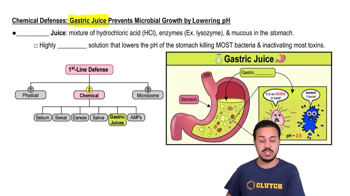
Chemical Defenses: Gastric Juice Prevents Microbial Growth by Lowering pH
181
views
3
rank
02:18
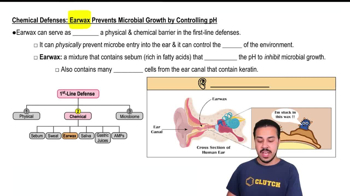
Chemical Defenses: Earwax Prevents Microbial Growth by Controlling pH
1634
views
16
rank
02:04
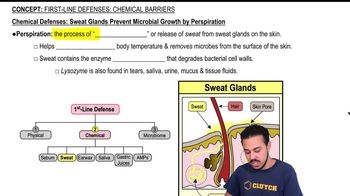
Chemical Defenses: Sweat Glands Prevent Microbial Growth by Perspiration
1789
views
28
rank
이 집합의 용어 (15)
하이드의 정의
Sebum
Oily substance from sebaceous glands that lowers skin pH and inhibits microbial growth by creating an acidic environment.
Sweat
Fluid secreted by skin glands containing lysozyme and other chemicals that remove microbes and lower body temperature.
Earwax
Complex mixture in the ear canal that traps microbes, lowers pH, and contains antimicrobial chemicals for dual barrier protection.
Saliva
Oral fluid rich in enzymes like lysozyme that inhibit microbial growth and prevent colonization in the mouth.
Gastric Juice
Highly acidic stomach secretion with hydrochloric acid and enzymes that kills ingested bacteria and inactivates toxins.
Antimicrobial Peptides
Short amino acid chains produced by epithelial cells that disrupt microbial membranes, leading to cell lysis.
Lysozyme
Enzyme present in body fluids that degrades bacterial cell walls, providing protection across multiple body sites.
Sebaceous Glands
Skin structures that secrete sebum, contributing to the skin's chemical defense by lowering pH.
Defensins
Positively charged antimicrobial peptides that insert into microbial membranes, causing lysis and protecting skin and mucosa.
pH
Measurement of acidity or alkalinity; lowering it in body secretions inhibits microbial survival and growth.
Epithelial Cells
Cells lining body surfaces that produce antimicrobial peptides to protect against infection.
Hydrochloric Acid
Strong acid in gastric juice responsible for the stomach's low pH and destruction of most ingested microbes.
Keratin
Protein in ear canal skin cells that creates a dry environment, further inhibiting microbial growth.
Innate Immunity
Non-specific defense system including physical and chemical barriers that provide immediate protection against pathogens.
Perspiration
Process of sweat release that removes microbes from skin and contributes to chemical defense.
 뒤로뒤로
뒤로뒤로
 02:07
02:07